
India does not have a wedding industry. India has a wedding economy.
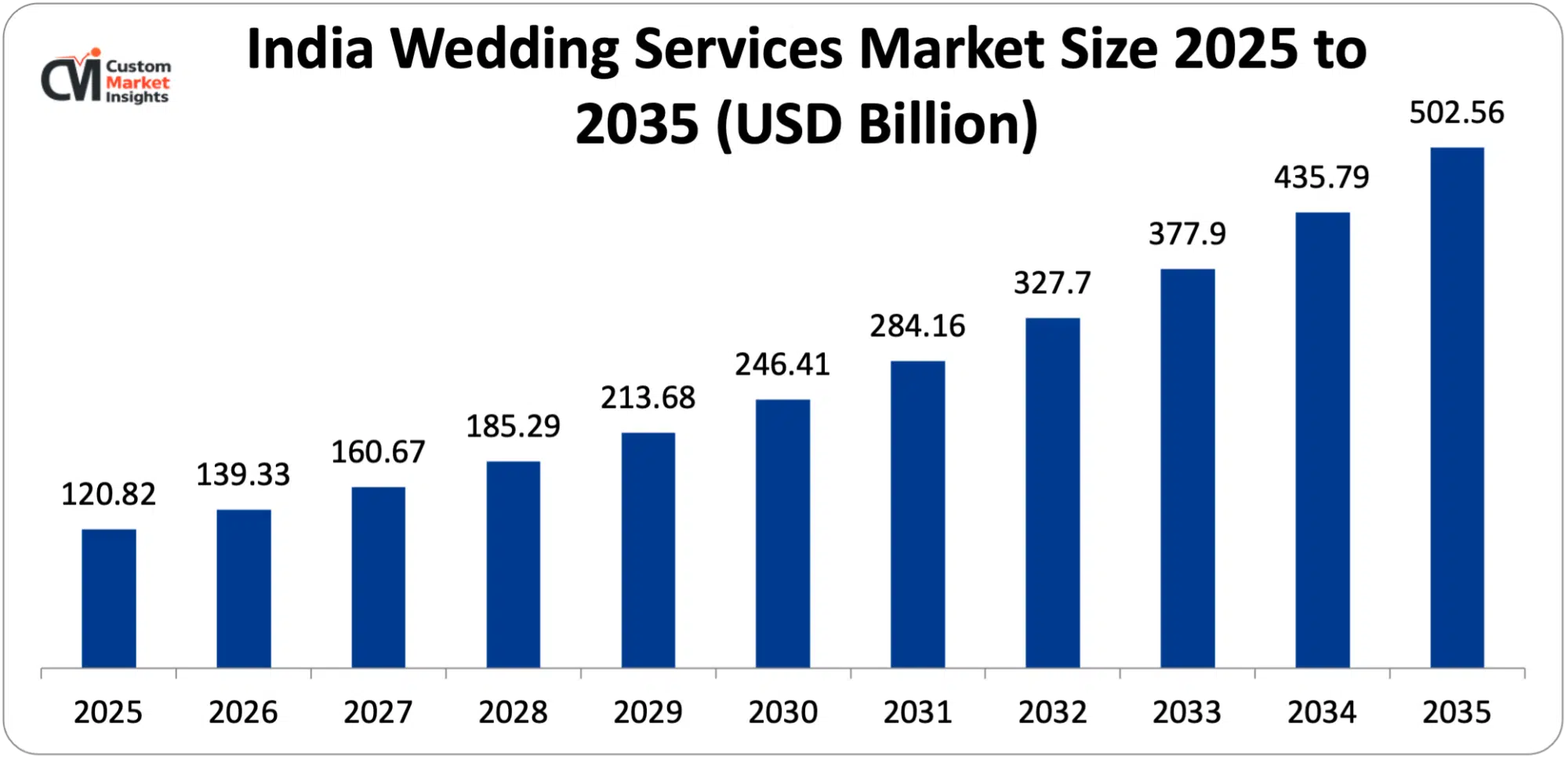
The India wedding services market was valued at USD 139.33 billion in 2026 and is projected to reach USD 502.56 billion by 2035, growing at a CAGR of 15.32%. (Custom Market Insights, 2026)
To put that in perspective: this is one of the few industries where even Tier-2 and Tier-3 cities generate crore-level spending every wedding season.
Around 46% of Indian couples now hire professional wedding planners (Markntel Advisors, 2026), a number that has been rising steadily as families prefer to hand off coordination to someone they trust.
If you have an eye for detail, the ability to stay calm under pressure, and the will to build vendor relationships, there has never been a better time to enter this space.
Here is how to start, even with no prior experience.
Why Wedding Planning Is a Strong Business to Start in India
Three reasons this market rewards new entrants:
1. Volume is massive. Around 3.5 million weddings are planned across India in the November-to-January season alone. (Markntel Advisors, 2026) Even a small share of that in your city is a full-time business.
2. Average budgets are rising. The average Indian wedding budget in 2025 was Rs 39.5 lakh, an 8% increase year-on-year. (WedM ppeGood Annual Wedding Industry Report 2025-26) Families are spending more, and they are willing to pay a planner to protect that investment.
3. The professional planning segment is the fastest-growing. Event planning services within the wedding industry are expected to grow at the fastest CAGR of 17.95% between 2026 and 2035. (Custom Market Insights, 2026) The segment is still being organised, which means early movers in smaller cities have a real advantage.
Step 1: Choose Your Niche Within Wedding Planning
Wedding planning is a wide term. Starting as a generalist makes it harder to build a reputation fast.
Pick one focused niche first:
- Full-service wedding planning – You handle everything from venue search to farewell brunch
- Day-of coordination – The couple plans everything; you execute it on the wedding day
- Specific function planning – Mehndi, sangeet, haldi, or reception only
- Destination wedding planning – Requires more logistics skills but commands higher fees
- Micro/intimate weddings – Under 100 guests, growing fast post-2020 in urban markets
Starting narrow builds your portfolio faster. A planner known for stunning sangeet setups gets referrals from every guest at those sangeets.
Step 2: Get Real Exposure First
You do not need a degree. You need firsthand knowledge of how Indian weddings actually run.
Practical ways to build this quickly:
- Assist a working wedding planner for 2 to 3 events, even unpaid
- Spend time with vendors: visit a tent house, talk to a decorator, shadow a caterer at a large function
- Attend as many weddings as possible as a critical observer, not just a guest. Note what worked and what did not.
- Study what goes wrong: power failures, late caterers, seating confusion, missing items
The problems you will be paid to prevent are the same ones that happen at almost every unplanned event.
Step 3: Register Your Business
There is no single license specific to wedding planning. You register a standard service business.
At the start, most planners operate as a sole proprietorship. It is simple, requires no separate incorporation, and can be set up in a few days.
What you actually need:
- Udyam (MSME) Registration – Free, fully online at udyamregistration.gov.in, takes under 15 minutes
- GST Registration – Required above Rs 20 lakh turnover, but get it early since most banquet halls and corporate clients ask for a GSTIN before signing contracts
- Current bank account in your business name
- Trade license from your municipal body if you operate from a commercial space
For a full breakdown of every document and registration required, our event business documents checklist covers everything step by step.
Step 4: Build Your Vendor Network (This Is Everything)
Your vendor network is your actual product. Clients are hiring your ability to put together the right people, not just your ideas.
Build relationships across:
Venue and structure:
- Banquet halls, farmhouses, hotel event coordinators
- Tent and shamiana suppliers for outdoor functions
Food and beverage:
- Caterers at 2 to 3 price points (budget, mid-range, premium)
- Live counter vendors: chaat, coffee, snacks
Decor and florals:
- Flower decorators with portfolio
- Themed decor vendors for backdrop and stage work
Technical:
- Sound and light vendors with proper equipment
- Photography and videography teams at multiple budgets
- DJ and live music performers
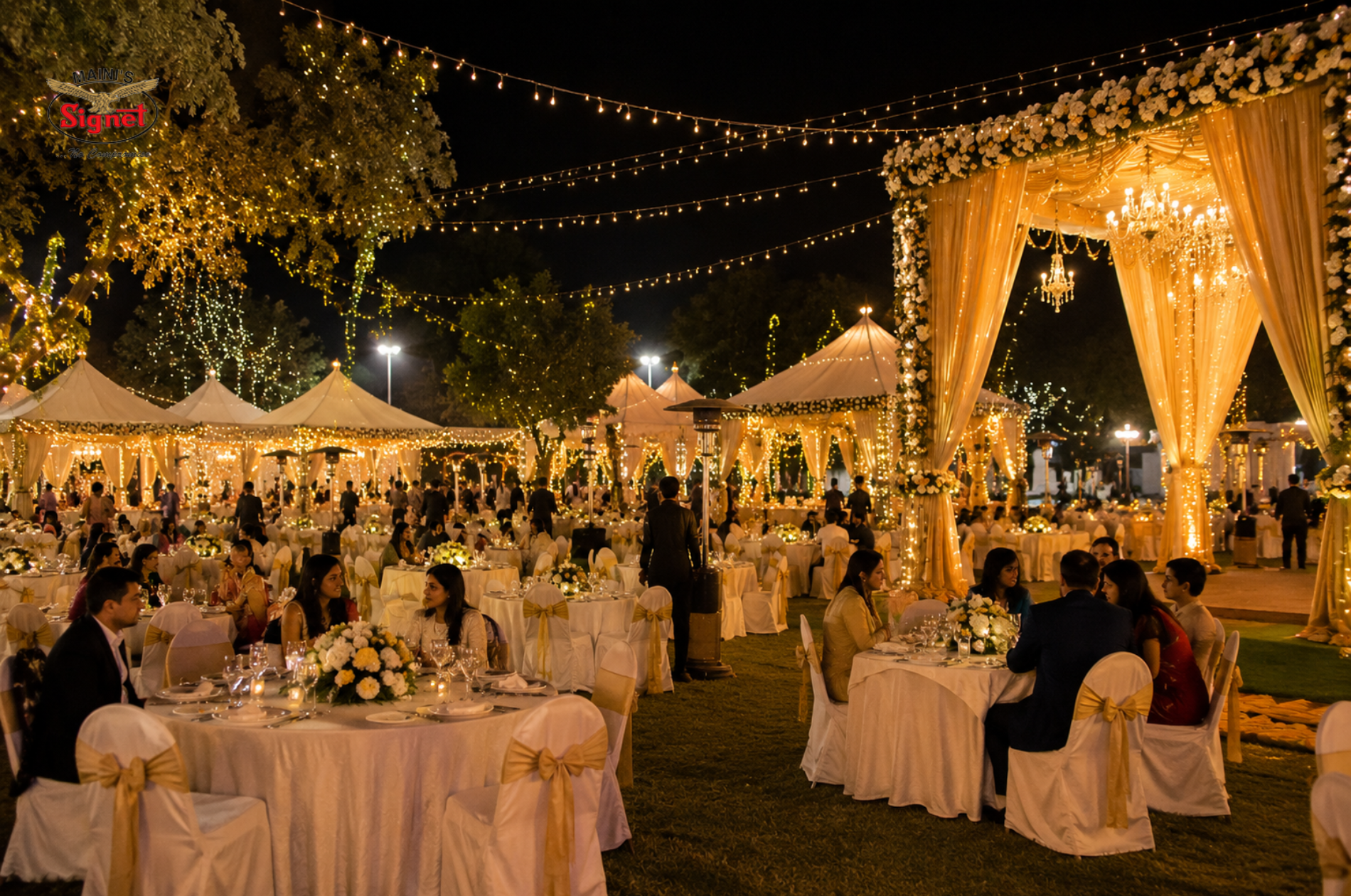
Equipment for comfort: For outdoor wedding setups, comfort equipment makes the biggest difference in guest experience. Mist fans, air coolers, and heaters are the kind of items that guests notice when absent. Maini’s Signet supplie mist fans, Farrata fans, air coolers, and heaters to wedding vendors and event companies across India.
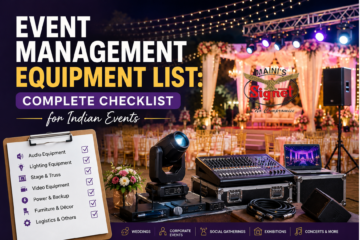
For reference on what a complete wedding setup requires, the event management equipment list breaks down every category with quantity guidelines.
Step 5: Decide How You Will Charge
Three standard pricing models used by wedding planners in India:
Flat fee per event: You quote a single price to manage the wedding end-to-end. Works well once you have 3 to 5 weddings done and know your actual time investment.
Percentage of total wedding budget: Typically 10 to 15% of the total event spend. This model aligns your income with the size of the wedding and is common at the premium end.
Per-function fee: Charge separately for each function (mehndi, sangeet, reception). Good when starting out because it lowers the entry barrier for clients who want help with one part, not the whole wedding.
Important: Always take 30 to 50% advance before booking any vendor on the client’s behalf. Never absorb vendor costs personally while waiting for client payment.
Step 6: Understand What Makes Weddings Different From Other Events
Weddings are not just “bigger events.” They have unique challenges.
Multiple functions, multiple days. A typical North Indian wedding involves 4 to 6 separate functions across 2 to 3 days. Each needs its own setup, vendor schedule, and mood.
High emotional stakes. The client is not a company approving a conference budget. This is their family’s most significant social event. Mistakes feel personal.
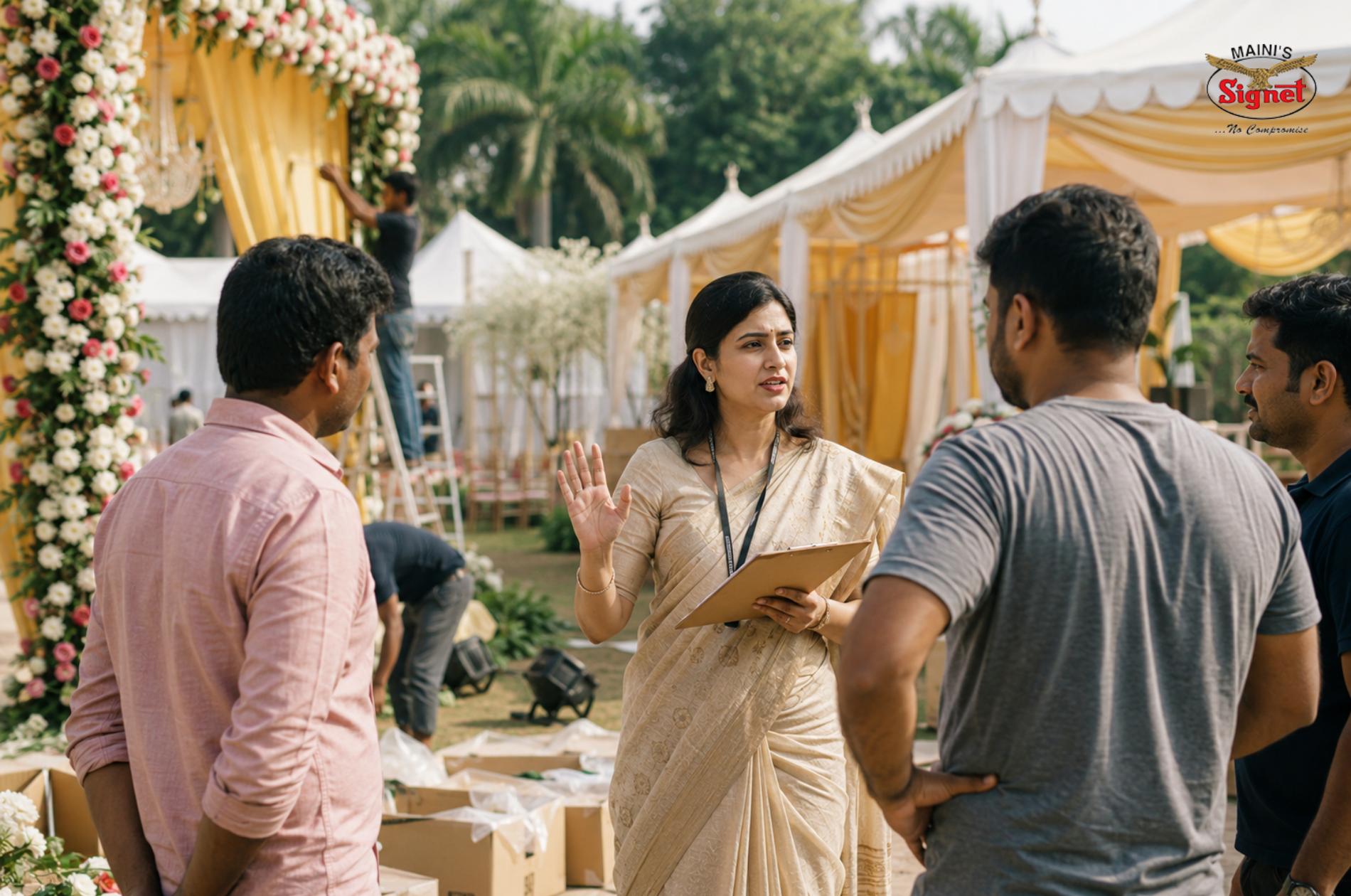
More vendors than any other event type. A mid-size wedding may involve 15 to 20 separate vendors. Your job is to coordinate all of them to the same timeline.
Weather and season dependency. Winter season (November to February) is peak wedding time in North India. Outdoor setups in this season need heating solutions as seriously as summer setups need cooling. A forgotten heater on a cold December night is remembered for years.
Step 7: Get Your First Clients
Zero portfolio is a real barrier. Here is how to get past it quickly:
- Offer to plan a relative’s or friend’s wedding at cost or below market rate in exchange for full creative control and the right to use photos
- Partner with photographers and decorators who are already working with young couples; propose a referral arrangement
- Set up a Google Business Profile so you appear in local searches for “wedding planner near me”
- Post before-and-after setup content on Instagram and YouTube Shorts; wedding content performs exceptionally well on both platforms
- List your services on WedMeGood and Wedmosphere; these platforms are where couples actively search for planners
After every event, ask for a written testimonial and 3 to 5 usable photos. These two things are your sales tools for the next 6 months.
What a Wedding Planning Business Earns
Ranges vary widely by city and niche:
- Day-of coordination: Rs 15,000 to Rs 50,000 per event
- Single function planning (sangeet, mehndi): Rs 25,000 to Rs 1 lakh
- Full-service wedding planning (mid-range): Rs 1.5 lakh to Rs 5 lakh
- Destination wedding planning: Rs 5 lakh to Rs 25 lakh and above
In a city like Jaipur, Delhi, or Chandigarh, average wedding budgets run significantly higher, with Jaipur leading at Rs 73 lakh average spend per wedding in 2025. (WedMeGood Annual Wedding Industry Report 2025-26) A 10% planning fee on that is Rs 7.3 lakh per booking.
Even at 4 to 6 weddings a year in the beginning, this is a viable independent business.
FAQs
Do I need a formal qualification to become a wedding planner in India? No. There is no mandatory certification. Several private institutes offer event management diplomas, but clients hire based on portfolio, references, and personality, not certificates.
What is the best season to start building my business? Start networking and building your portfolio between April and September, so you are ready to take on bookings for the peak November-to-March season.
Can this be run as a home-based business? Yes, especially in the early stages. Most client meetings happen at venues or over video calls. A registered home address is fine for Udyam registration.

Ready to Start Executing?
Once you take your first booking, equipment and vendor readiness become your biggest advantage over competitors.
Maini’s Signet has supplied event equipment to wedding vendors and tent house operators across India since 1961. From mist fans and air coolers for summer functions to heaters for winter setups, and coffee machines and snack counters that clients request by name, browse the full product range or call/WhatsApp at +91-9811150123.
For the complete event business starting guide, read: How to Start an Event Management Business in India.