
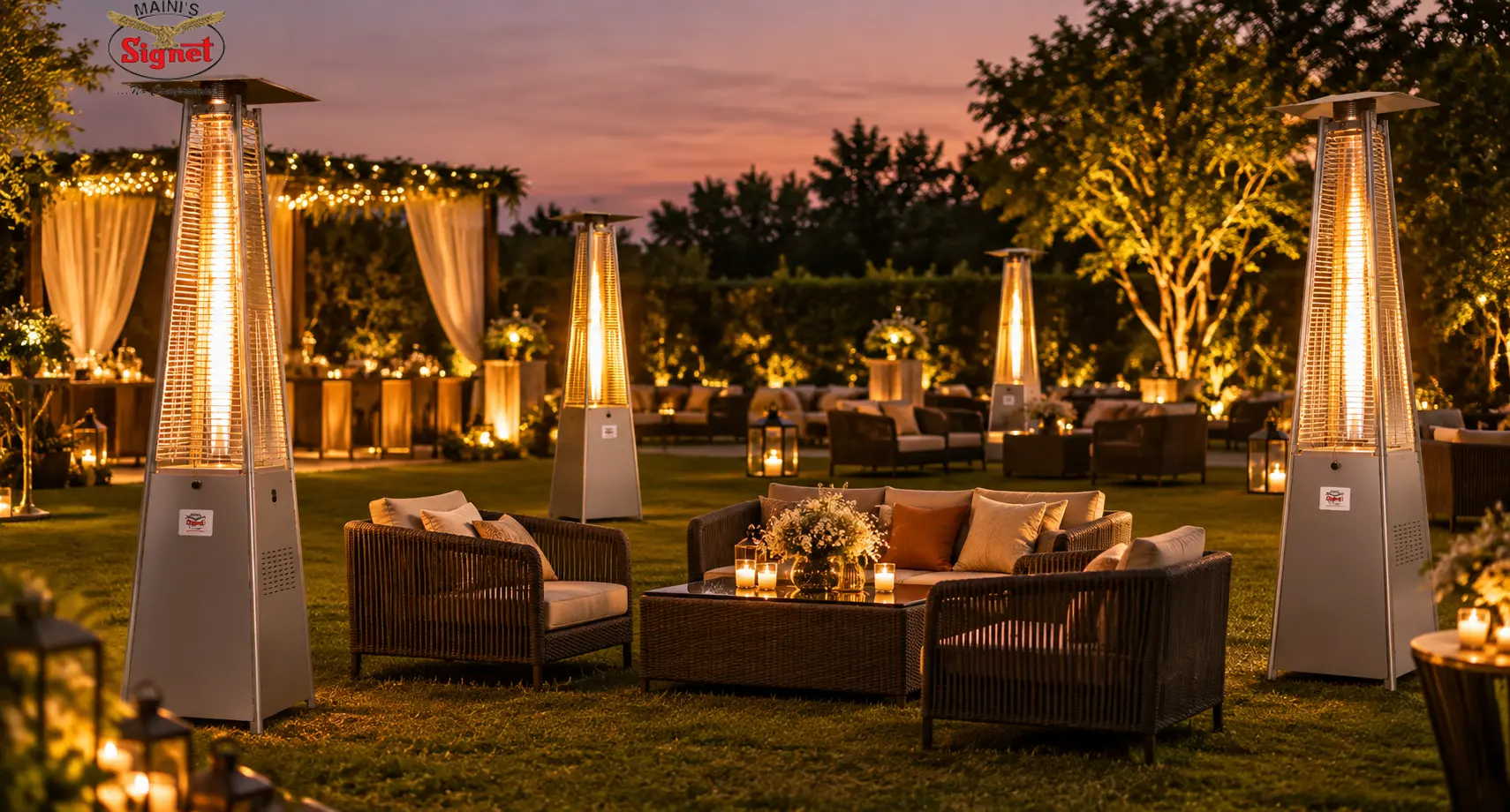
For an open lawn in North Indian winter, plan on one outdoor heater for every 12 to 15 guests. Inside a covered shamiana or marquee with side walls, one heater per 20 to 25 guests is usually enough.
That ratio is a starting point, not a final number. The count that actually keeps people warm comes from square footage and zones, not headcount alone.
Here is how to work it out properly, including cylinder limits most planners find out about too late.
Quick Reference: Wedding Heater Count by Guest Number
Use this table for a first estimate, then refine it with the zone method below.
| Guest Count | Open Lawn or Terrace | Covered Shamiana or Marquee |
|---|---|---|
| 100 guests | 7 to 8 heaters | 4 to 5 heaters |
| 200 guests | 13 to 17 heaters | 8 to 10 heaters |
| 300 guests | 20 to 25 heaters | 12 to 15 heaters |
| 400 guests | 27 to 33 heaters | 16 to 20 heaters |
| 500 guests | 33 to 42 heaters | 20 to 25 heaters |
| 800 guests | 53 to 67 heaters | 32 to 40 heaters |
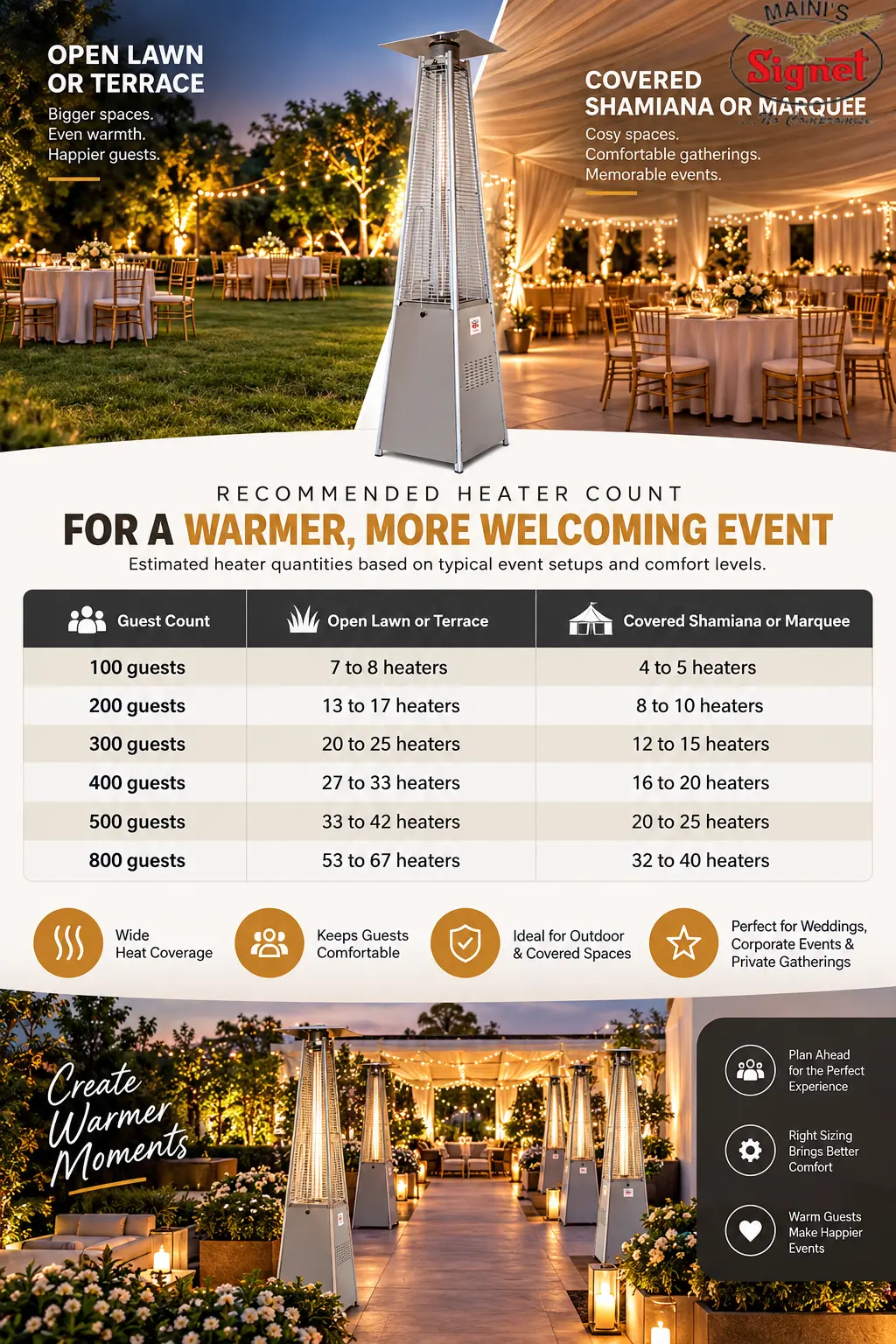
Add two spare units to every order. Cylinders run dry and ignition modules fail, and a spare on the ground beats a cold corner during the pheras.
How Many Square Feet Does an Outdoor Heater Cover?
A freestanding pyramid or mushroom heater throws heat in a circle. So coverage is simple geometry: the area of a circle drawn around the unit.
A standard pyramid gas heater warms a radius of roughly 10 to 15 feet, which is what we quote on our own outdoor heater product guidance.
| Heat Radius | Circle Area | Realistic Planning Figure |
|---|---|---|
| 10 feet (3 m) | 314 sq ft | 300 sq ft |
| 12 feet (3.6 m) | 452 sq ft | 420 sq ft |
| 15 feet (4.5 m) | 707 sq ft | 650 sq ft |
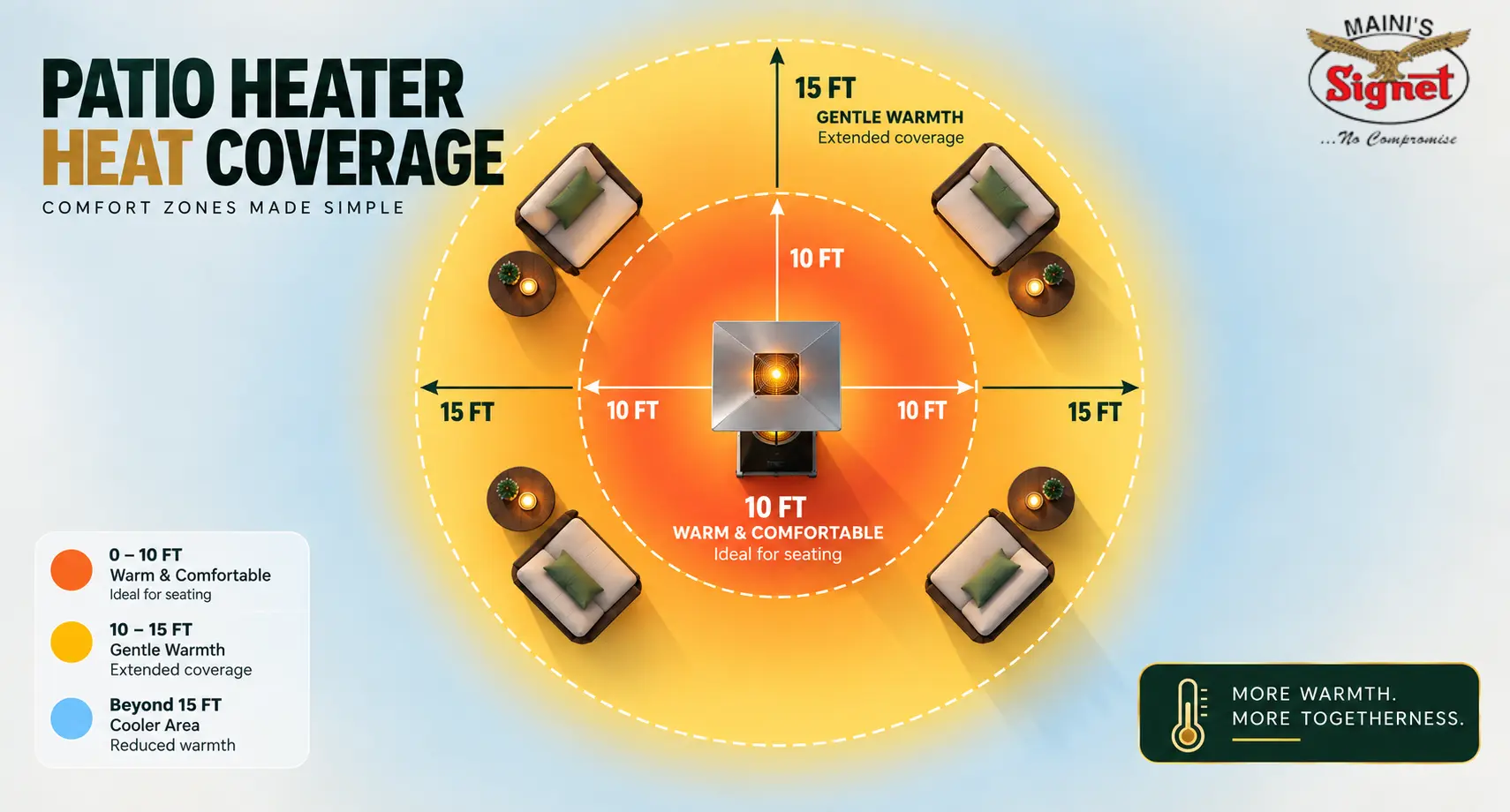
Here is the part most sizing charts skip. Warmth at the outer edge of that circle is noticeably weaker than warmth three feet from the pole.
Our planning rule: size on 300 sq ft per heater for open-air winter events, and treat the 15 foot figure as the outer limit rather than the working number.
That single adjustment is why two planners quoting the same lawn can be fifteen heaters apart.
Why Radiant Heat Behaves This Way
Patio heaters do not warm the air around them in any useful sense. Outdoors, warmed air simply rises and leaves.
They work by infrared radiation instead. The UK Department for Energy Security and Net Zero defines radiant heating equipment as products designed to heat people or objects below them by infrared radiation
Without heating the surrounding air directly, and notes that correct positioning matters because the heater should sit in line with the person needing the heat.
You can read the specification on the Energy Technology List radiant heating page.[1]
Practical consequence: a heater aimed at an empty walkway is doing nothing. Heaters must point at where people actually stand and sit.
The Zone Method: How Professionals Actually Count
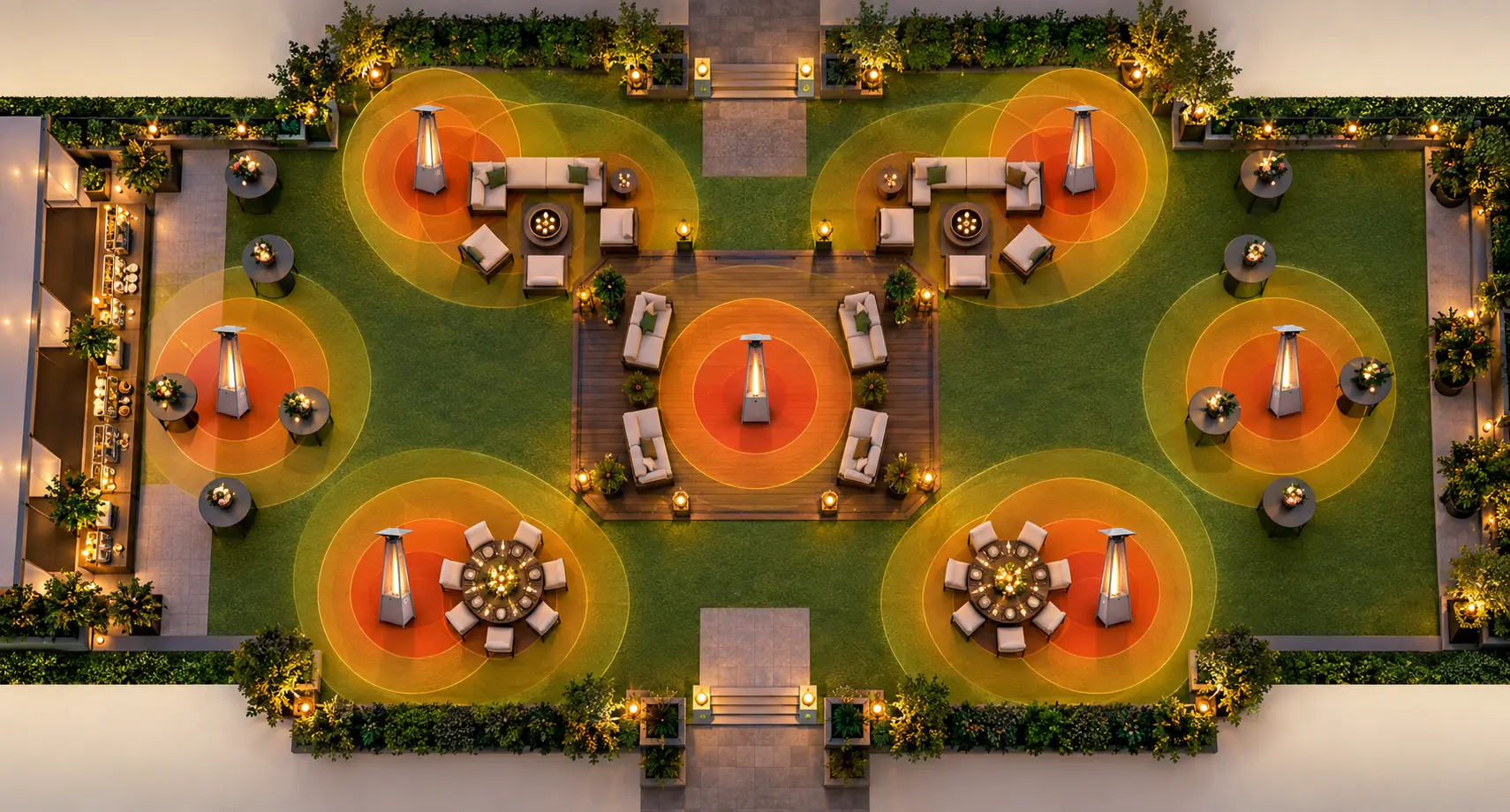
Nobody heats an entire lawn. Guests cluster, and you heat the clusters.
Break the venue into zones, measure each one, divide by 300 sq ft, and add them up.
- Entry and welcome area: guests arrive from heated cars and feel the cold hardest here. Heat it generously.
- Cocktail and standing lounge: the longest dwell time of the evening in most Indian weddings.
- Dining and buffet line: people stand still while queuing, so cold hits harder than it does on the dance floor.
- Stage, mandap and family seating: the family sits for hours in light clothing. Highest priority per square foot.
- Bar and dessert counters: small footprint, high footfall.
- Dance floor: perimeter heaters only. Moving guests generate their own warmth.
Skip the parking area, the service corridors and the kitchen. Heating those is money burnt for nobody.
Worked Example: 400 Guests on a Delhi NCR Farmhouse Lawn
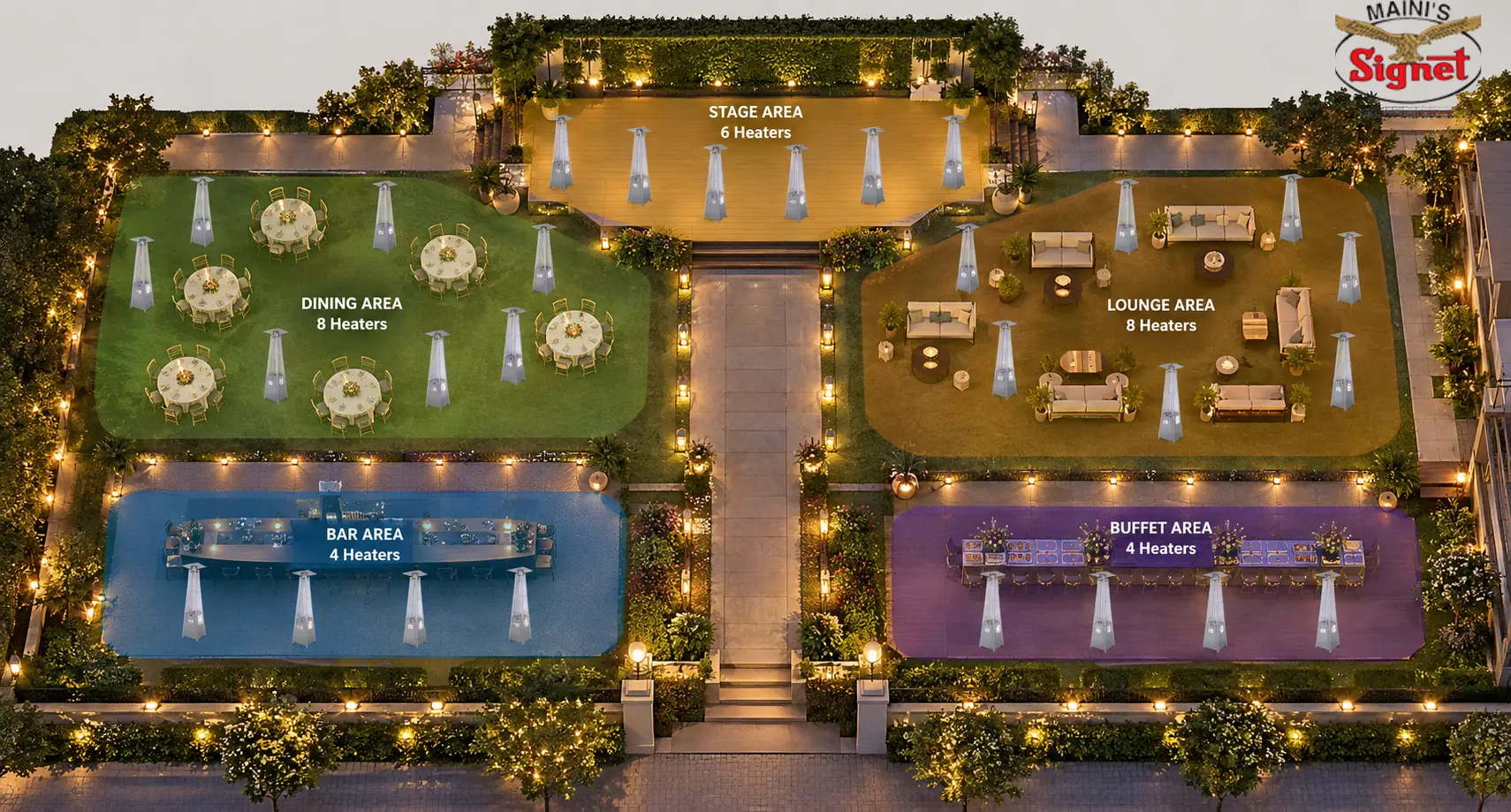
A December sangeet and dinner, open lawn, no side walls, 5 hour event.
| Zone | Area | Heaters at 300 sq ft each |
|---|---|---|
| Entry and welcome | 900 sq ft | 3 |
| Cocktail and standing lounge | 2,400 sq ft | 8 |
| Dining and buffet | 3,000 sq ft | 10 |
| Stage and family seating | 1,200 sq ft | 4 |
| Bar and dessert counters | 600 sq ft | 2 |
| Dance floor perimeter | 900 sq ft | 3 |
| Total | 9,000 sq ft | 30 heaters |
Thirty heaters for 400 guests works out to one per 13 guests, which lands inside the quick reference range. Order 32 so two sit in reserve.
Three Conditions That Change Your Count
1. How Cold the Night Actually Gets
Delhi’s winter nights are not uniformly mild. The India Meteorological Department’s Delhi climate summary notes that temperatures can fall to 3 to 4 degrees Celsius
On some winter days when cold winds from the Himalayas sweep the region, and that mornings are often marked by mist and fog. The detail is in the IMD Delhi climate guide.[2]
IMD also declares a cold wave in the plains when the minimum temperature drops to 10 degrees Celsius or below and sits 4.5 degrees under normal.
Its seasonal outlooks track expected cold wave days across northwest India, published through the IMD winter season press releases.[3]
If your date falls in late December or January, add 20 percent to your calculated count. A cold wave night on a 30 heater plan means ordering 36.
2. Open Lawn Versus Enclosed Structure
Side walls change everything. A shamiana with three enclosed sides holds radiant warmth against surfaces and blocks wind, which is why the covered column in the reference table runs roughly 40 percent lower.
Half enclosed setups sit between the two columns. Use the open lawn figure minus 20 percent.
3. Wind Across the Site
Wind is the single biggest destroyer of outdoor heating budgets. It strips warm air off guests faster than any heater replaces it.
Walk the venue at the same hour your event runs, not at noon. Note which edges catch wind, then either add heaters there or move the seating.
Gas or Electric: How It Changes the Number
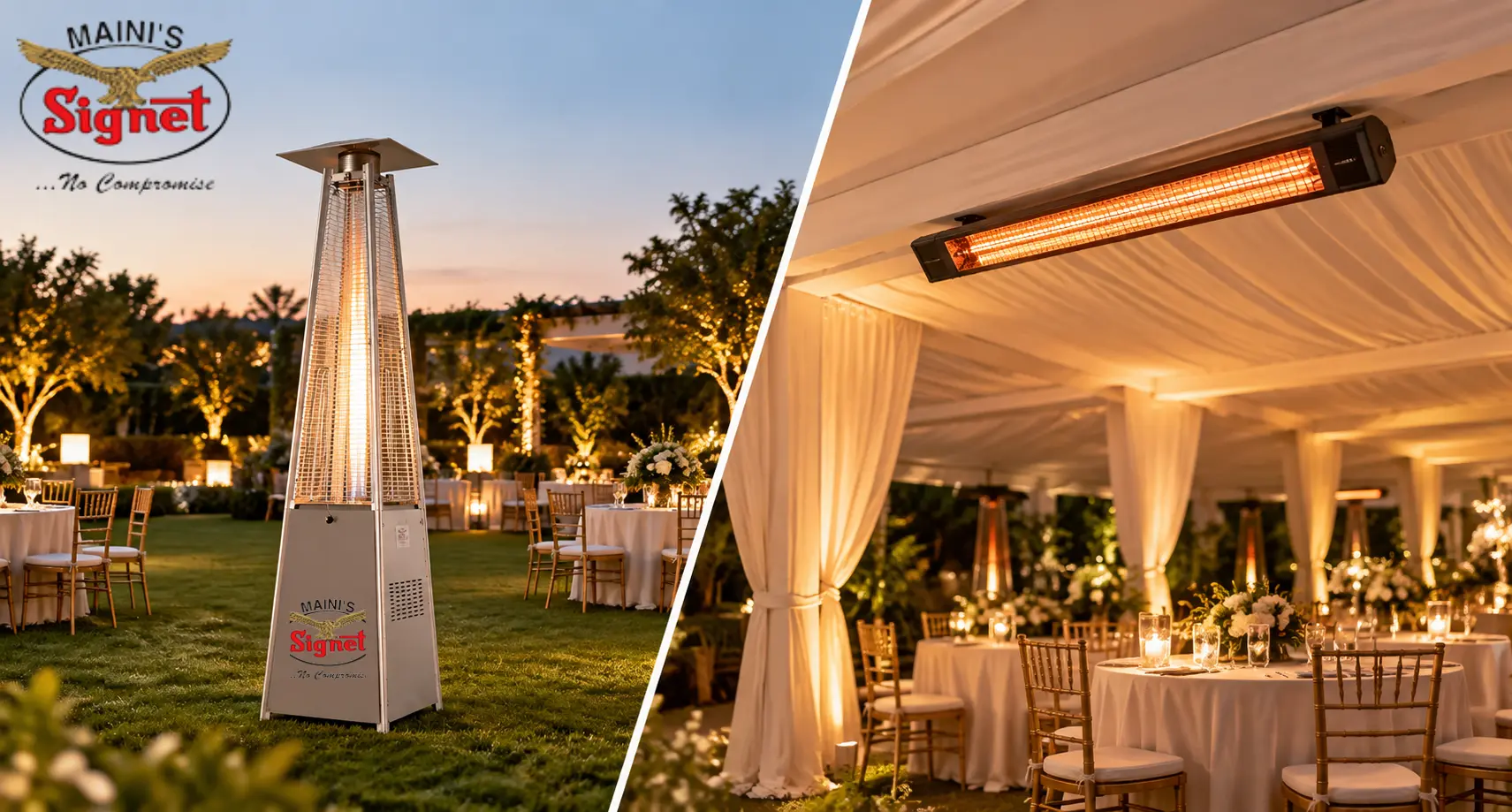
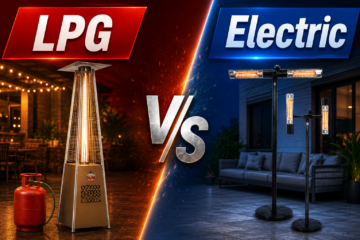
Both types are counted the same way, but the constraints differ completely.
| Factor | LPG Pyramid Heaters | Electric Infrared Heaters |
|---|---|---|
| Best for | Open lawns, terraces, no wiring available | Covered marquees, verandas, stage areas |
| Coverage per unit | Larger circle, roughly 300 to 650 sq ft | Tighter directional zone |
| Main constraint | Cylinder supply and storage limits | Generator and distribution load |
| Wind tolerance | Flame affected by gusts | Unaffected, silent, odourless |
| Visual effect | Visible flame adds ambience | Discreet, blends with decor |
Most large Indian weddings run a mix. Gas units across the open lawn, electric units under covered dining and near the stage where silence matters during rituals.
For a breakdown of running costs on the electric side, see our guide to outdoor heater electricity consumption. Thirty electric units at 2 kW each pull 60 kW, which your generator plan has to absorb alongside lighting and sound.
How Many LPG Cylinders Will 30 Heaters Need?
This is where wedding heating plans most often break down.
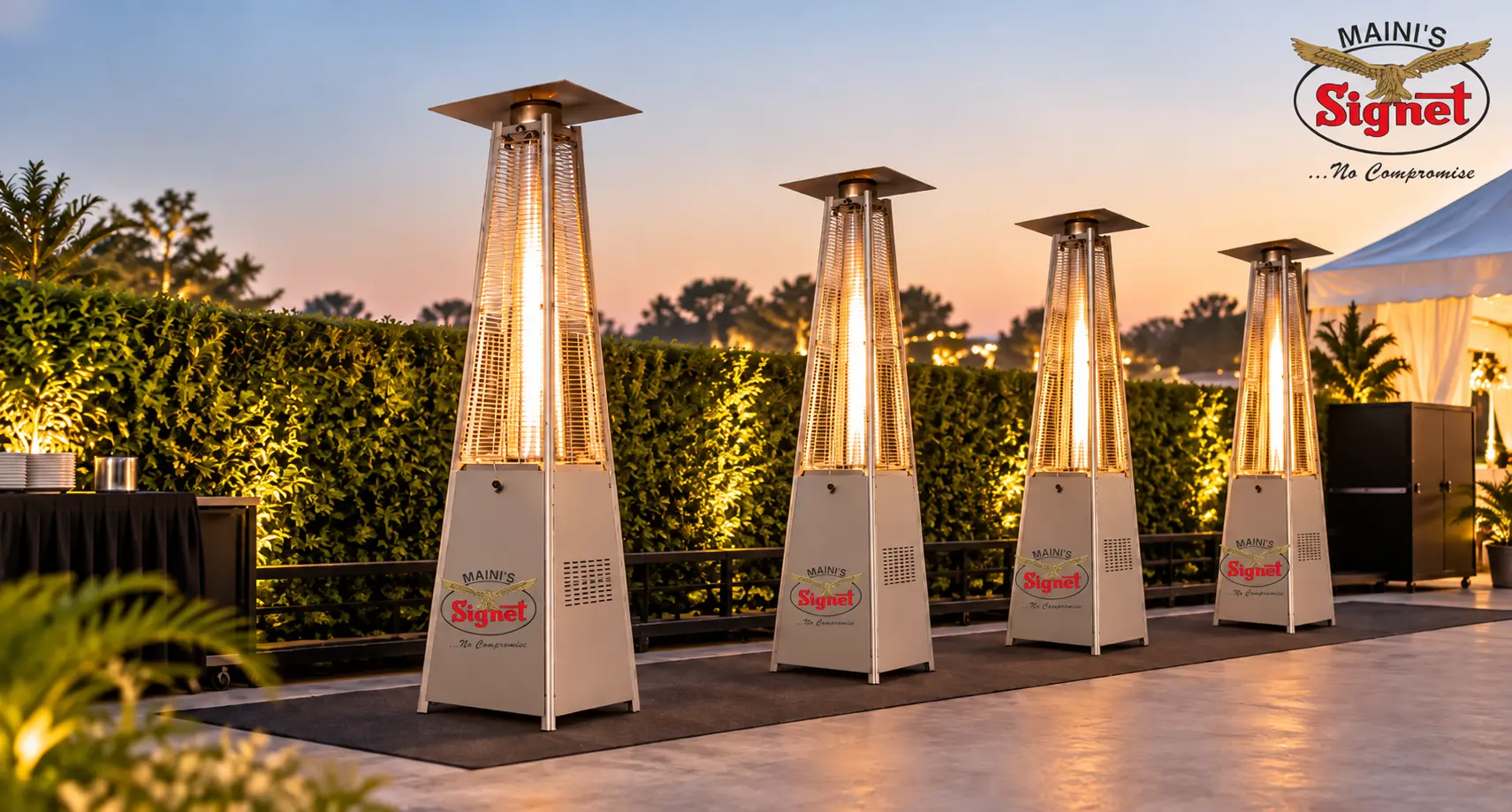
Our pyramid gas heaters consume roughly 0.9 kg of LPG per hour at maximum setting. Across a 5 hour event, one heater burns about 4.5 kg.
Thirty heaters therefore consume around 135 kg over the evening. With a 19 kg commercial cylinder attached to each unit, that is 570 kg of LPG standing on your lawn.
Now the regulation. Under the Gas Cylinders Rules, 2016, administered by India’s Petroleum and Explosives Safety Organisation, no licence is required only when the total quantity of LPG in cylinders does not exceed 100 kg at a time for own use, distribution or sale from a dealer’s sales room.
PESO states this directly in its official FAQ on the Gas Cylinders Rules[4], and the full rules are hosted on the PESO Gas Cylinder Rules 2016 page.[5]
Any large wedding crosses that threshold immediately. The practical answer is to route cylinder supply through a licensed LPG distributor who handles compliance, and to confirm arrangements with your venue and the local PESO circle office before the date.
PESO also requires that LPG cylinders are always kept upright and placed so they cannot be knocked over, that no oil or lubricant is used on valve fittings, and that any cylinder exposed to fire is withdrawn until it passes examination and hydrostatic testing.
This section summarises published regulation for planning purposes and is not legal advice. Confirm current requirements with your supplier and the relevant authority.
Placement and Safety Rules That Come Before the Count
A correct heater count placed badly is still a failed plan.
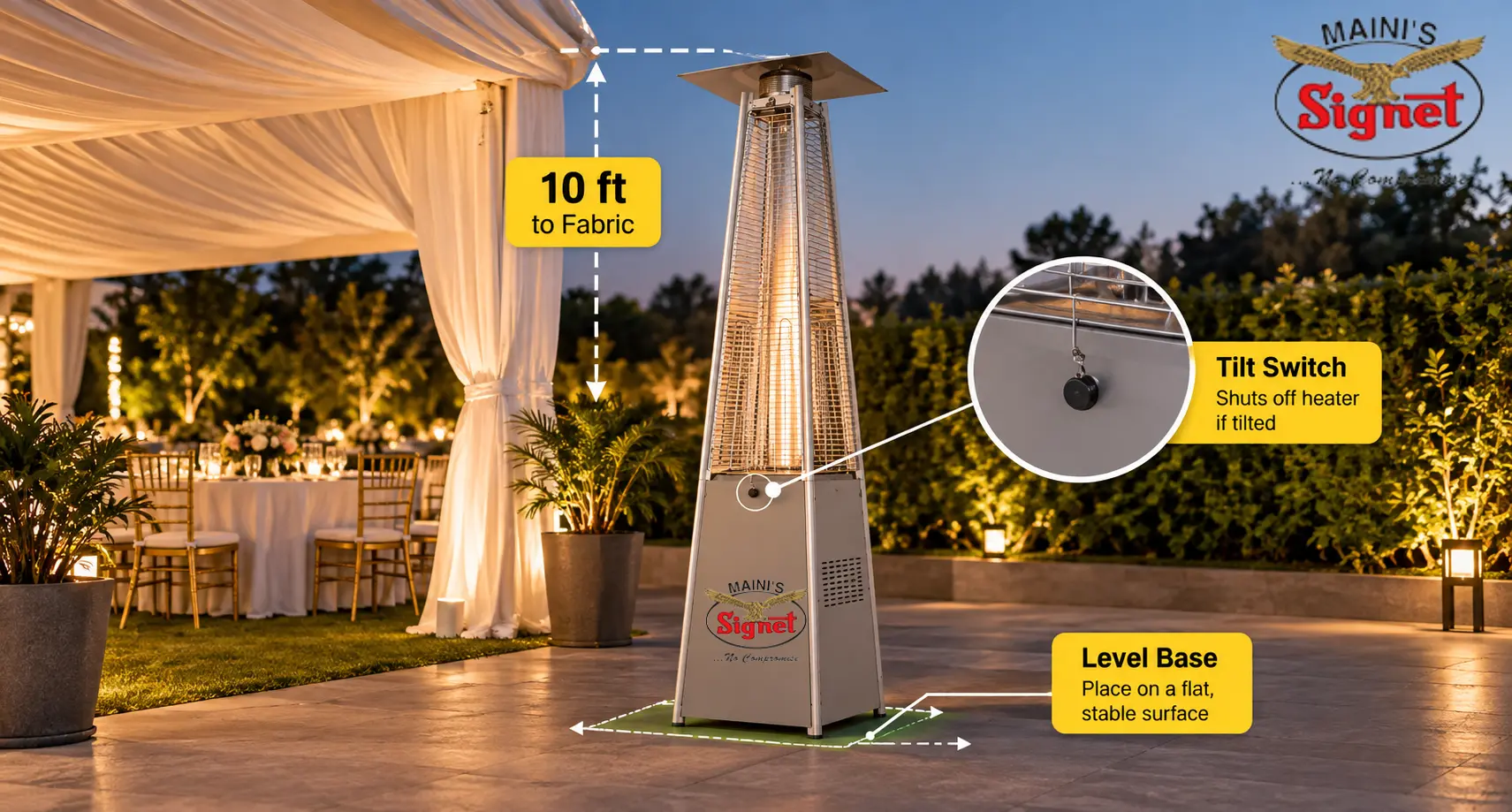
- Keep 10 feet from fabric. US OSHA requires that heaters used near combustible tarpaulins, canvas or similar coverings
- Sit at least 10 feet from the covering, and that the covering is fastened so wind cannot blow it into the heater. The standard is published at OSHA 1926.154 on temporary heating devices.[6] Shamiana cloth, drapes and floral backdrops all count.
- Level ground only. OSHA also requires heaters to be set horizontally level when in use. Soft lawn soil sinks under a loaded heater base, so use ground plates.
- Place at the edge, aim inward. Ring seating clusters from outside rather than dropping heaters into the middle of walkways.
- Never enclose a gas heater fully. Combustion appliances need ventilation. The UK Health and Safety Executive’s guidance on safe use of LPG[7] stresses identifying and managing these risks before use.
- Insist on tilt and flame failure protection. Every Maini Signet gas unit shuts off automatically if tipped or if the flame goes out, which matters in a crowd with children running between tables.
- Brief the staff. One named person per zone should know how to shut a unit down.
Four Mistakes That Leave Guests Cold
Counting by area instead of by zone. Dividing total lawn size by coverage gives a huge number and still leaves the mandap cold.
Using the maximum coverage figure. Sizing at 650 sq ft per heater when guests feel real warmth at 300 sq ft halves your effective count.
Forgetting the entry. The first 90 seconds set the guest’s impression of the whole evening.
Ordering exactly the calculated number. Always carry spares.
Book Your Wedding Heaters
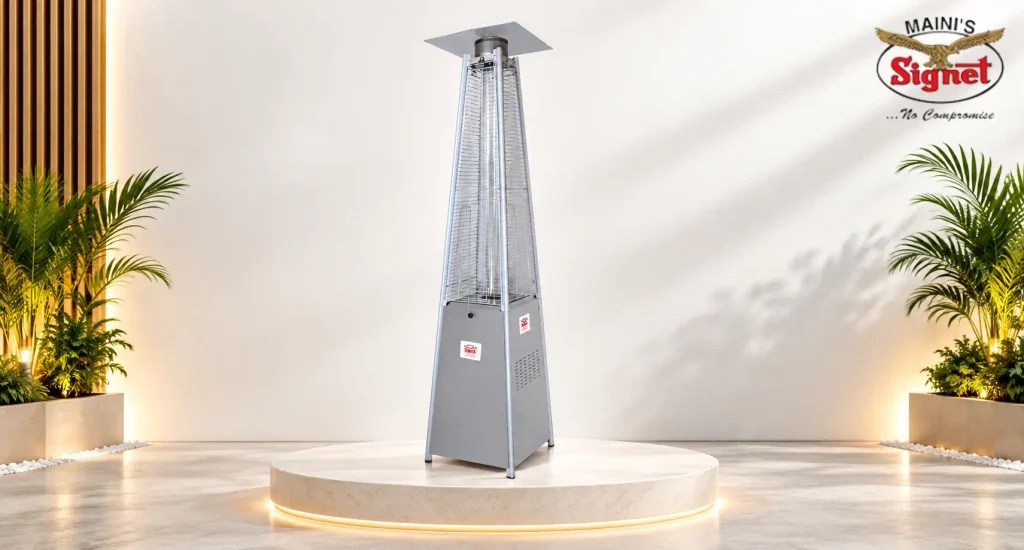
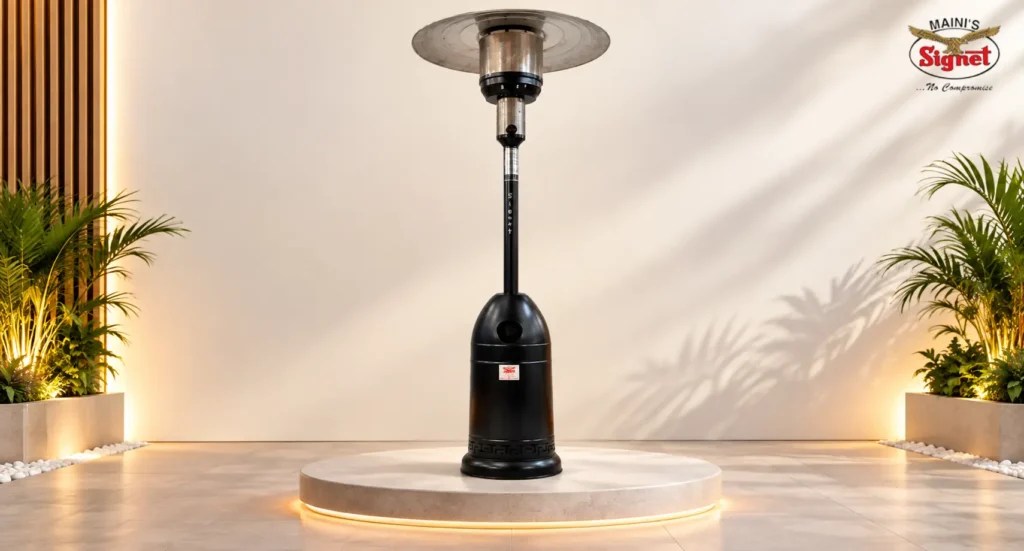
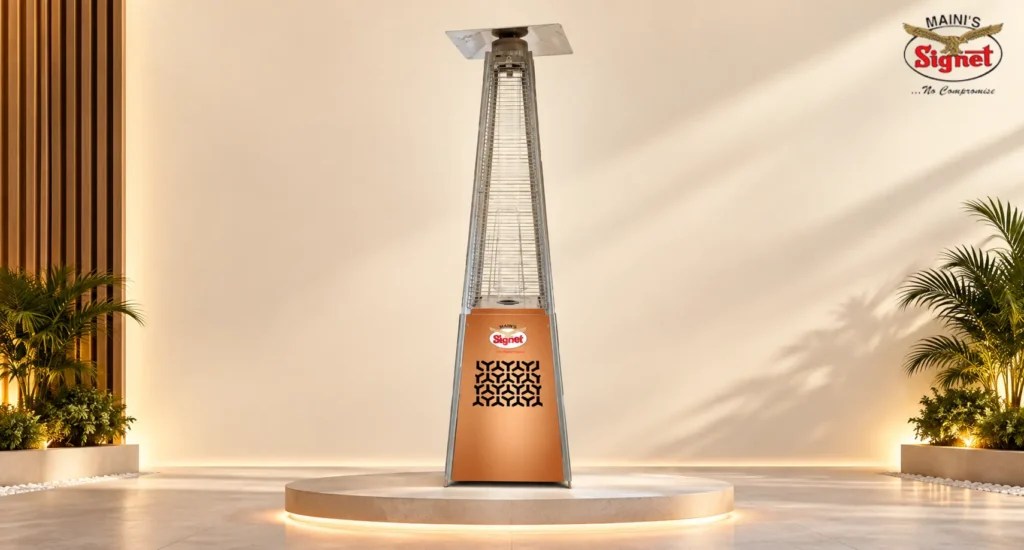
Maini Signet supplies gas and electric heaters for weddings across India, from farmhouse lawns to hotel terraces. Send us your venue dimensions and guest count and we will return a zone-by-zone heater plan.
Call +91 9811150123 or +91 9811150237, or browse our full range of electric and LPG heaters.
You can also see how our units are configured specifically for outdoor heaters for Indian weddings, and how the same models are deployed for restaurant and hospitality venues.
Frequently Asked Questions
How many heaters do you need for a wedding of 200 guests?
Plan on 13 to 17 heaters for an open lawn and 8 to 10 for a covered shamiana.
Confirm the number by measuring your occupied zones and dividing by 300 square feet per heater.
How many square feet does an outdoor heater cover?
A standard pyramid gas heater with a 10 to 15 foot heat radius covers a circle of roughly 314 to 707 square feet.
For winter events where guests must feel genuinely warm, plan on 300 square feet per heater rather than the maximum figure.
Should I choose gas or electric heaters for a wedding?
Gas suits open lawns with no power access and adds a visible flame.
Electric suits covered dining, verandas and stage areas where silence and zero odour matter. Large weddings usually combine both.
How far should heaters be from a shamiana or tent fabric?
At least 10 feet, following the OSHA standard for heaters used near canvas and tarpaulins.
The fabric must also be fastened so wind cannot move it toward the heater.
How many LPG cylinders does a wedding need?
Allow one 19 kg cylinder per gas heater for an evening event, with spares.
Remember that Indian rules exempt only up to 100 kg of LPG in cylinders from licensing, so any large setup must be supplied through a licensed distributor.
Do heaters work on a windy lawn?
Yes, but output drops sharply. Add heaters on the exposed edges, use wind screens or decor barriers, and prefer electric infrared units where gusts are persistent.
References:
- https://etl.energysecurity.gov.uk/products/radiant-warm-air-heaters/radiant-heating-equipment ↩︎
- https://amssdelhi.gov.in/forecast/Climate.pdf ↩︎
- https://internal.imd.gov.in/press_release/20251201_pr_4517.pdf ↩︎
- https://peso.gov.in/web/sites/default/files/2024-08/FAQ-GCR-2024.pdf ↩︎
- https://www.peso.gov.in/web/en/gas-cylinder-rules-2016 ↩︎
- https://www.osha.gov/laws-regs/regulations/standardnumber/1926/1926.154 ↩︎
- https://www.hse.gov.uk/gas/lpg/safeuse.htm ↩︎