
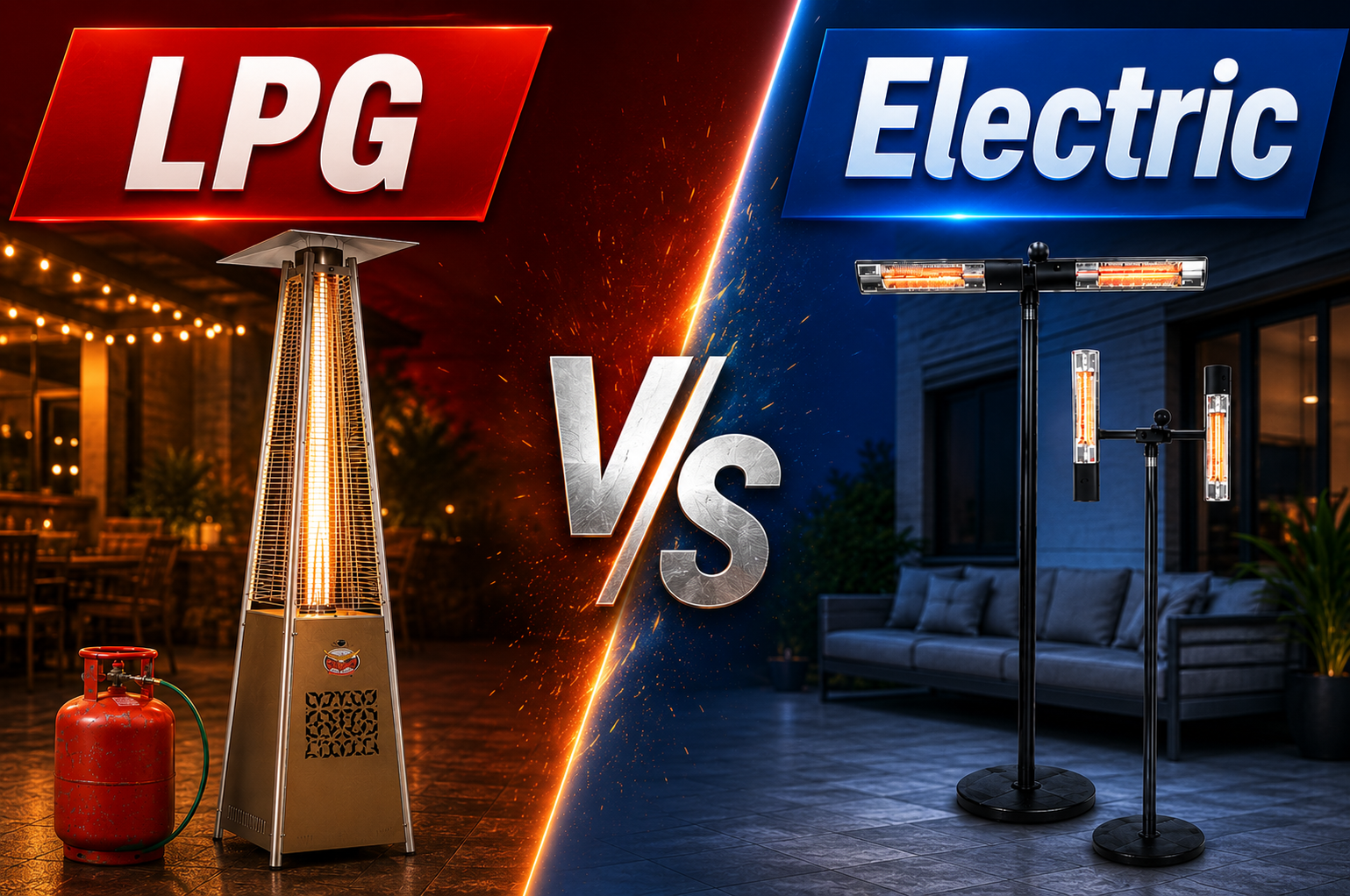
Every winter the same question comes up. i.e. which one is best LPG vs Electric Heater?
Do you go with an LPG heater that works without electricity, or an electric heater that is safer and easier to use?
The honest answer is that neither is universally better. The right choice depends on where you live, how you plan to use it, and what your electricity bill looks like. This guide breaks it all down in plain terms.
What is an LPG Heater?
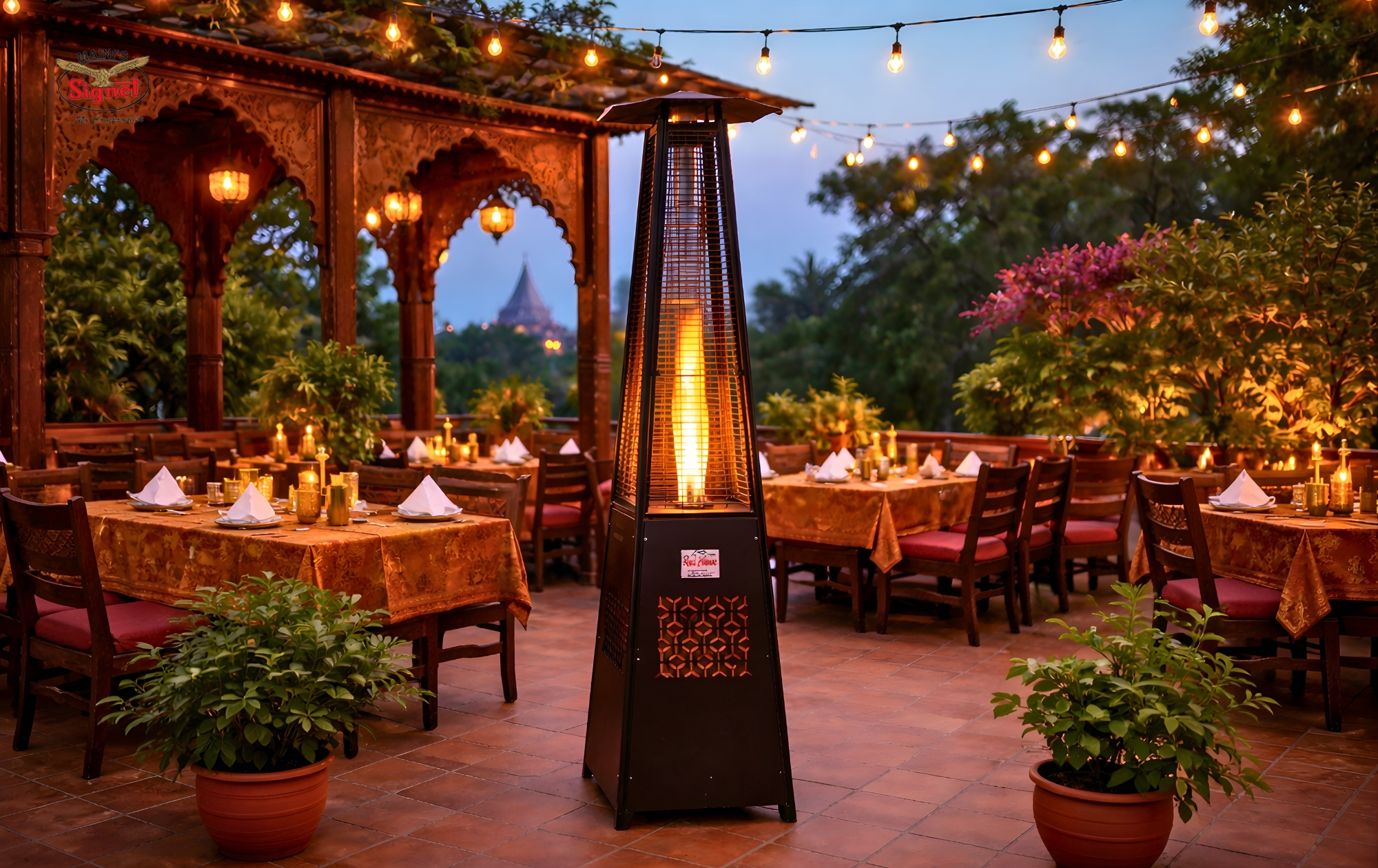
An LPG heater burns liquefied petroleum gas from a cylinder to produce heat. It does not need electricity to run.
In India, LPG heaters are popular in areas with frequent power cuts, outdoor event spaces, restaurant patios, tent house setups, and cold regions like Himachal Pradesh, Uttarakhand, and Punjab.
They produce intense, fast heat and can warm large spaces quickly. That is their biggest advantage.
What is an Electric Heater?
An electric heater converts electricity into heat. No fuel cylinder, no flame, no combustion.
You plug it in and it works. Types commonly available in India include rod heaters, fan heaters or blowers, oil-filled radiators, and infrared or quartz heaters.
They are simple to use, require no fuel storage, and carry no combustion-related risks. That is their biggest advantage.

LPG vs Electric Heater: Pros and Cons
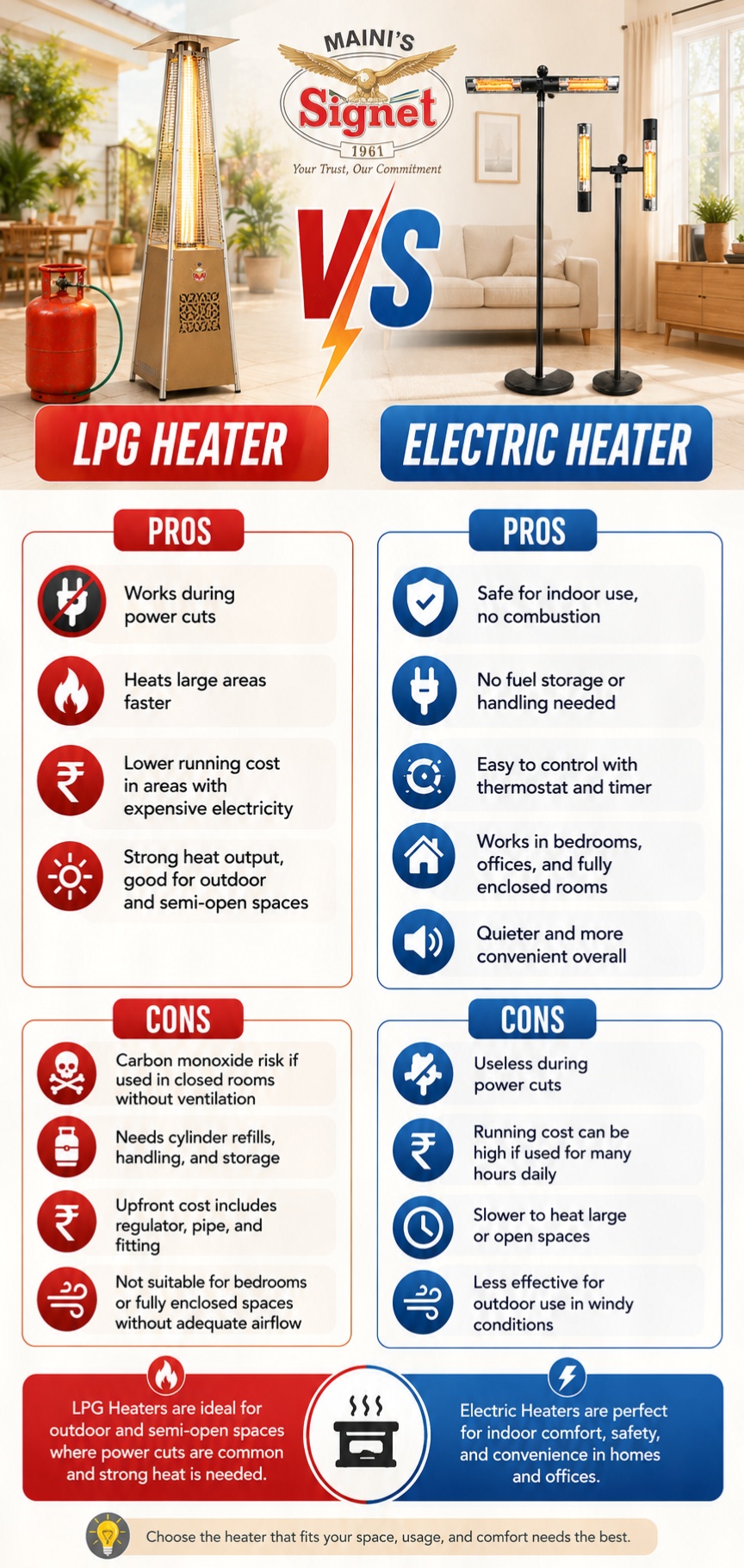
LPG Heater
Pros:
- Works during power cuts
- Heats large areas faster
- Lower running cost in areas with expensive electricity
- Strong heat output, good for outdoor and semi-open spaces
Cons:
- Carbon monoxide risk if used in closed rooms without ventilation
- Needs cylinder refills, handling, and storage
- Upfront cost includes regulator, pipe, and fitting
- Not suitable for bedrooms or fully enclosed spaces without adequate airflow
Electric Heater
Pros:
- Safe for indoor use, no combustion
- No fuel storage or handling needed
- Easy to control with thermostat and timer
- Works in bedrooms, offices, and fully enclosed rooms
- Quieter and more convenient overall
Cons:
- Useless during power cuts
- Running cost can be high if used for many hours daily
- Slower to heat large or open spaces
- Less effective for outdoor use in windy conditions
LPG vs Electric Heater: Running Cost in India
This is where most people make a decision based on incomplete numbers. Let us put real figures down.
Electric heater running cost:
A standard 1500-watt electric heater running 6 hours a day uses 9 units of electricity.
At a rate of Rs 6 per unit, that works out to Rs 54 per day. At Rs 8 per unit in a higher slab, it is Rs 72 per day.[1]
For a detailed breakdown of electricity costs by heater type, the outdoor heater electricity consumption guide on the Maini’s Signet blog covers it clearly.
LPG heater running cost:
A 14.2 kg domestic LPG cylinder currently costs Rs 900 to Rs 980 in most Indian metros and Tier-2 cities. [2]
A medium-sized LPG heater burns roughly 150 to 200 grams of gas per hour. Running it 6 hours a day uses around 1 kg of LPG daily. That is approximately Rs 65 to Rs 70 per day.
Quick summary:
| Electric Heater | LPG Heater | |
|---|---|---|
| Equipment cost | Rs 1,500 to Rs 8,000 | Rs 3,000 to Rs 12,000 |
| Daily running cost (6 hrs) | Rs 54 to Rs 72 | Rs 65 to Rs 70 |
| Power cut performance | Does not work | Works fine |
| Safe for closed rooms | Yes | Only with ventilation |
At current rates in India, the running costs are fairly close. The real deciding factor is not the cost per day. It is safety and use case.
Which One is Better: Situation by Situation
Use an LPG heater if:
- You live in an area with frequent or long power cuts
- You need to heat an outdoor dining area, tent, event space, or patio
- You want fast, powerful heat for large semi-open spaces
- You are running a tent house, catering setup, or event business
Use an electric heater if:
- You need heat inside a bedroom, office, or fully enclosed room
- You have children or elderly family members at home
- Power supply is reliable in your area
- You want something you can leave on overnight without worry
Safety: The One Point You Cannot Skip
This is the most important part of this article.
Burning 1 kg of LPG produces approximately 3 kg of carbon dioxide. In a poorly ventilated closed room, LPG combustion depletes oxygen and produces carbon monoxide, both of which are serious health risks.[3]
Rules for LPG heater safety:
- Never use in a sealed room with no airflow
- Always keep a window slightly open
- Check hose and regulator connections before every use
- Do not leave unattended while sleeping
- Keep a carbon monoxide detector nearby if using regularly indoors
Electric heaters are safer for enclosed indoor use. The main caution with electric heaters is not covering them, keeping them away from curtains and bedding, and not using them in wet areas without proper ratings.
FAQs
For indoor rooms, electric heaters are safer and more convenient. For outdoor spaces, events, and power-cut-prone areas, LPG heaters perform better. Many Indian households keep one of each for different uses.
At current rates, daily running costs are similar, around Rs 55 to Rs 70 for 6 hours of use. LPG has a slight edge in areas with expensive electricity above Rs 8 per unit. Electric has a slight edge where electricity is subsidised or in lower slabs.
Only with proper ventilation. They should never be used in sealed bedrooms. For fully enclosed spaces, always choose electric.
Maini’s Signet Heaters: LPG and Electric Both
Maini’s Signet manufactures both LPG heater lamps and electric heaters for commercial use across India.
LPG heater lamps are widely used at outdoor event venues, wedding setups, restaurant patios, and tent house businesses. Electric heaters suit indoor and semi-indoor commercial spaces.
Browse the full heaters range or read the commercial heater buying guide before deciding.
Call or WhatsApp at +91-9811150123 for a recommendation based on your space and use case.
References: