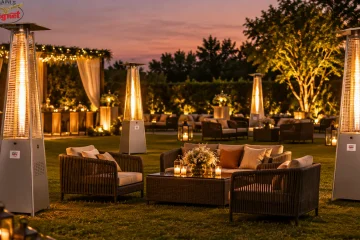

How to Keep an Outdoor Restaurant Warm in Winter is an important question for restaurants that want to keep their patios open during the colder months. A cold patio empties out fast. Guests will not sit through a meal shivering, no matter how good the food is.
The good news is that you can keep an outdoor restaurant warm in winter with the right mix of heat sources, wind protection, and smart layout choices. Many restaurants can continue using their outdoor spaces instead of closing patios when temperatures drop.
Here is what actually works and what you should check before installing anything.
Why Winter Patio Heating Is Worth the Investment
Every closed patio is lost seating capacity during your slowest months. Heated outdoor space keeps that revenue active instead of dormant from November through March.
It also gives guests a reason to choose you over a competitor whose patio sits empty and dark. A warm, well-lit outdoor section signals that you are open for business, not just tolerating winter.
1. Match the Heater to Your Space
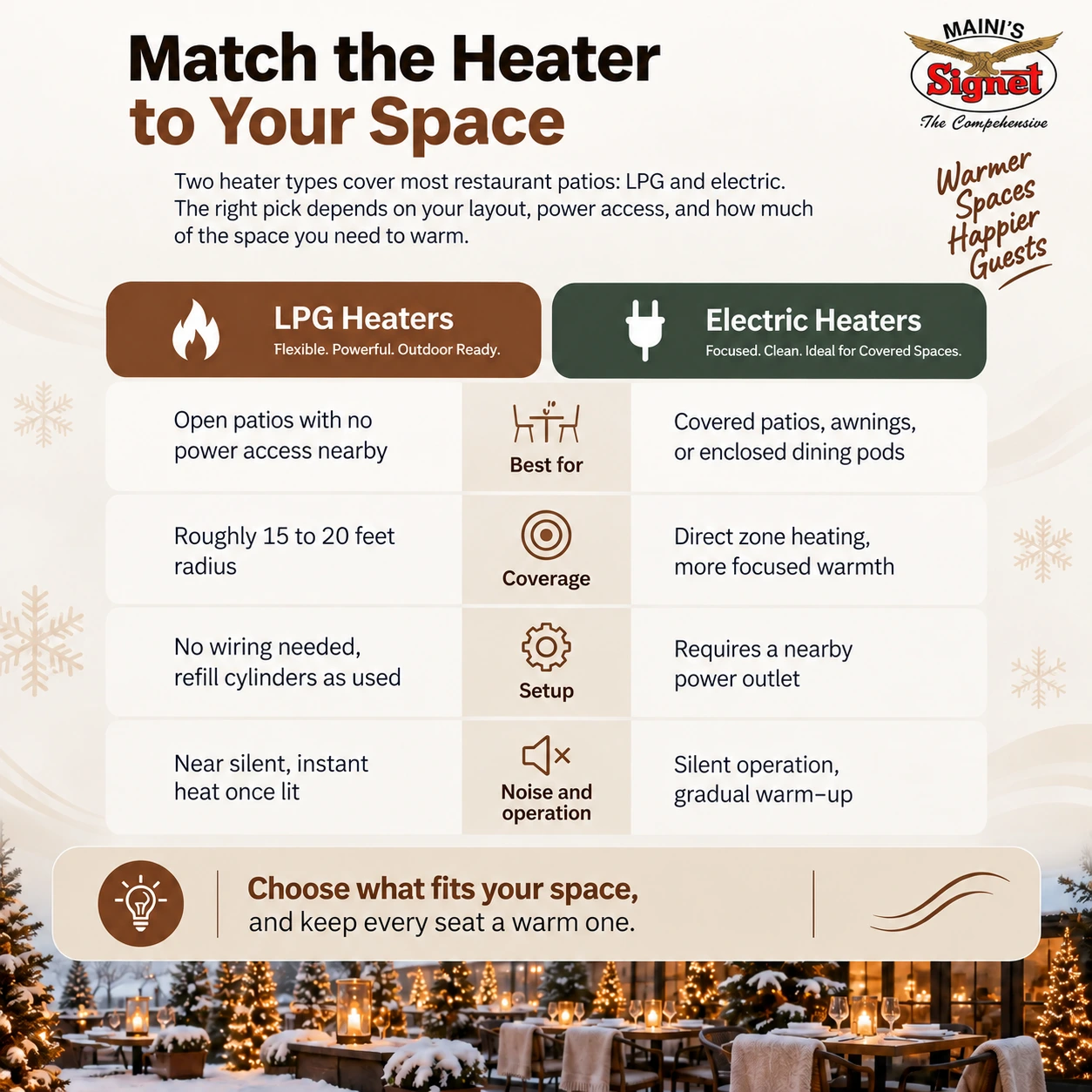
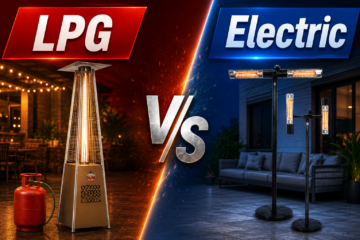
Two heater types cover most restaurant patios: LPG and electric. The right pick depends on your layout, power access, and how much of the space you need to warm.
| Feature | LPG Heaters | Electric Heaters |
|---|---|---|
| Best for | Open patios with no power access nearby | Covered patios, awnings, or enclosed dining pods |
| Coverage | Roughly 15 to 20 feet radius | Direct zone heating, more focused warmth |
| Setup | No wiring needed, refill cylinders as used | Requires a nearby power outlet |
| Noise and operation | Near silent, instant heat once lit | Silent operation, gradual warm-up |
Overlap coverage zones slightly so guests do not feel a cold gap between tables.
2. Block Wind Before You Add More Heat
Wind is often the real reason a patio feels unbearable, not the air temperature itself. According to the National Weather Service, a 0°F day with a 15 mph wind produces a wind chill of negative 19°F, cold enough to cause frostbite on exposed skin in about 30 minutes. (Source: National Weather Service)
Clear vinyl panels, retractable screens, or planters with windbreak fencing cut that wind exposure significantly. Blocking wind first means you need fewer heaters to reach the same comfort level.
Simple Windbreak Options
- Retractable clear vinyl curtains along open sides
- Tall planters or living walls positioned upwind
- Canvas or acrylic patio enclosures for semi-permanent setups
3. Follow Fire and Ventilation Safety Rules
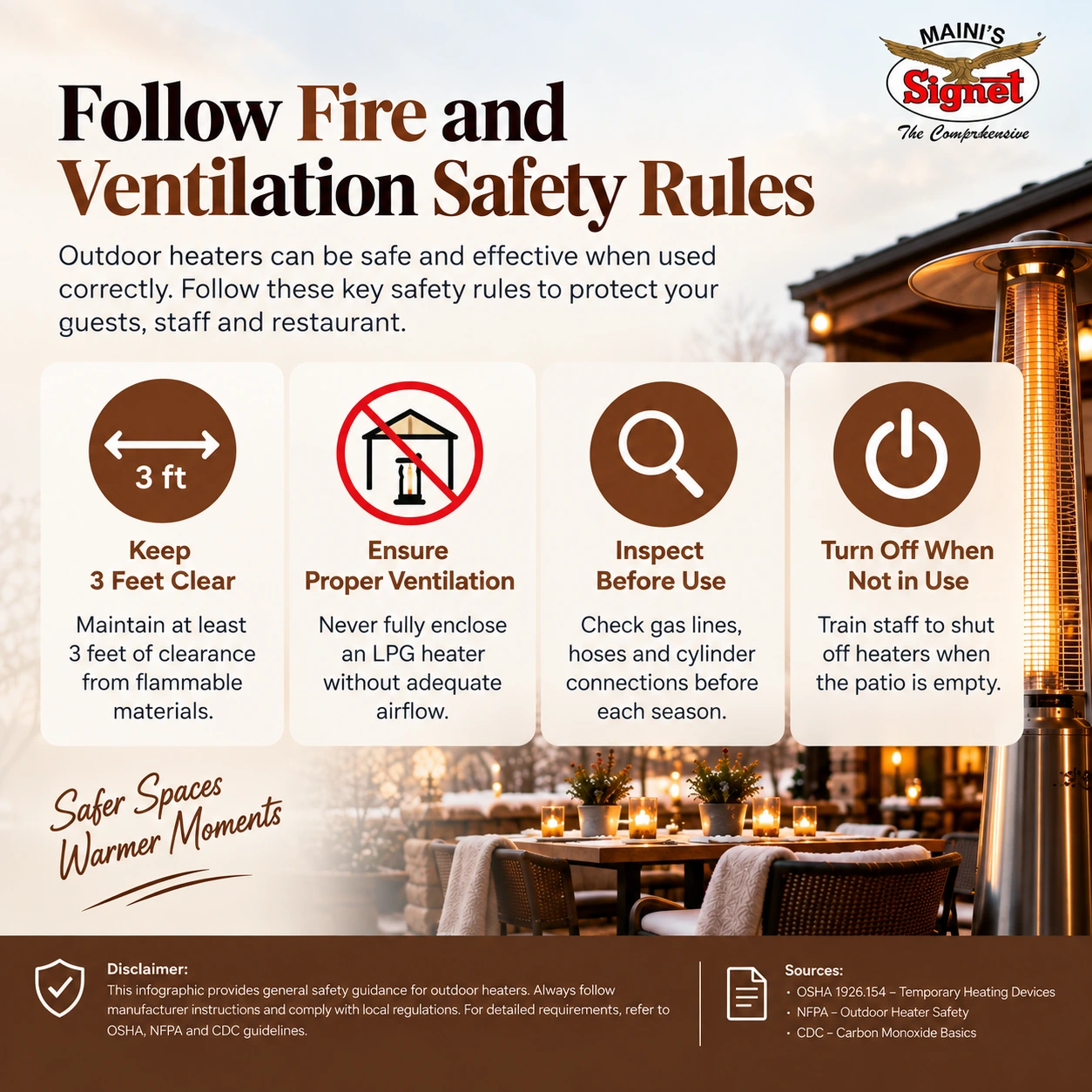
Outdoor heaters carry real fire and air quality risks if placed or maintained incorrectly. OSHA’s standard for temporary heating devices requires proper clearance and ventilation for any fuel burning heater used on a work site. (Source: OSHA 1926.154)
The National Fire Protection Association recommends keeping flammable material at least 3 feet away from any heating equipment and turning off portable heaters whenever the area is unoccupied. (Source : NFPA Outdoor Heater Safety)
Carbon monoxide is also a risk with any fuel burning heater in a partly enclosed space. The CDC reports that unintentional carbon monoxide poisoning not linked to fires causes more than 400 deaths and over 100,000 emergency department visits in the United States each year. (Source: CDC Carbon Monoxide Basics)
Quick safety checklist:
- Keep at least 3 feet of clearance around every heater
- Never fully enclose an LPG heater without adequate airflow
- Inspect gas lines, hoses, and cylinder connections before each season
- Train staff to shut off heaters when the patio is empty
4. Design the Layout to Hold Heat
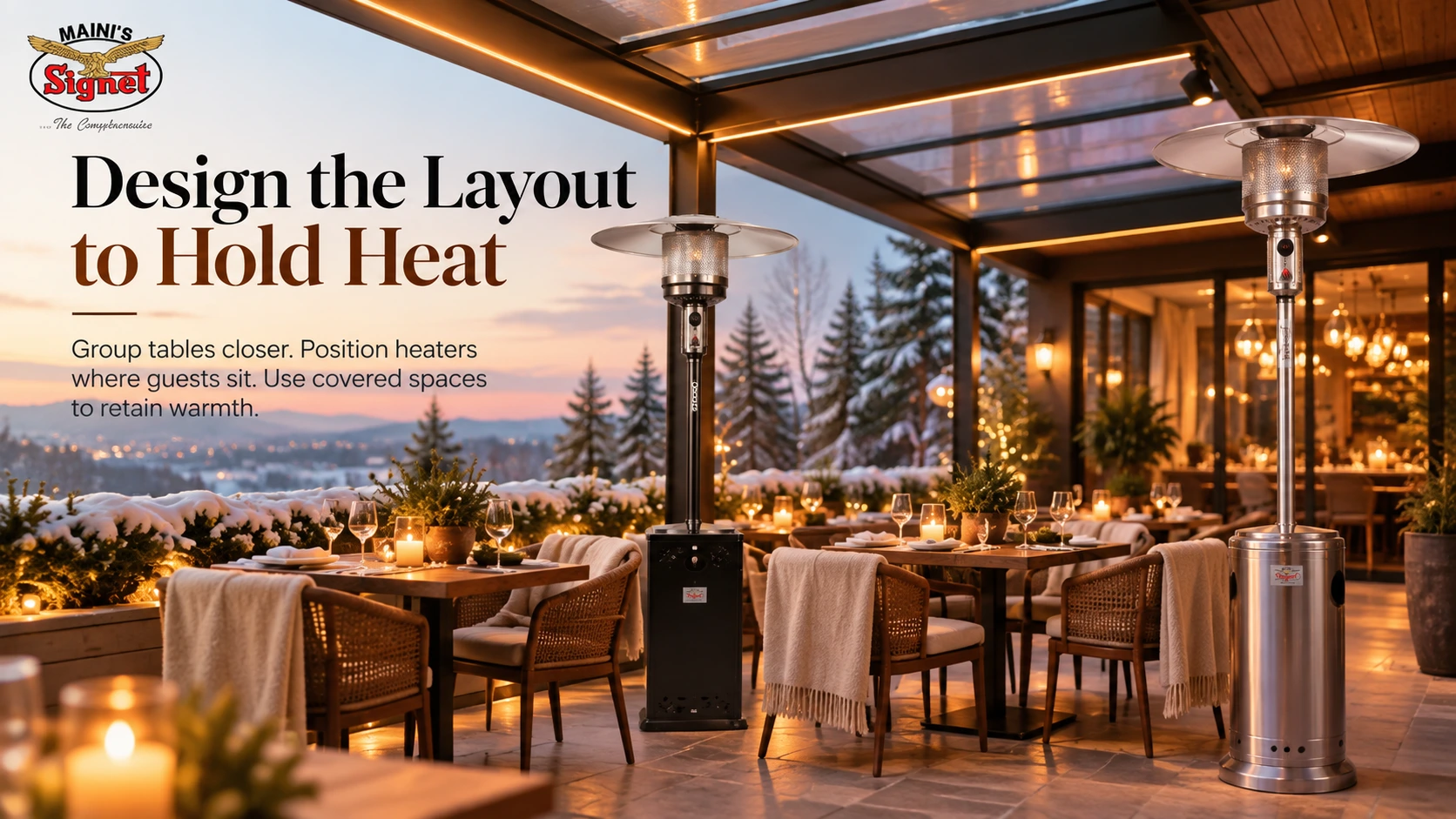
Group tables closer together in winter than you would in summer. Shared body heat and tighter heater coverage zones make a noticeable difference.
Position heaters so they warm seating areas, not walkways or empty floor space. A covered pergola or retractable roof also traps rising heat instead of letting it escape upward.
5. Keep Equipment Maintained All Season
A heater that worked fine in November can fail by January without regular checks. Build heater inspection into your weekly opening or closing checklist during winter months.
Check for gas leaks with a soapy water test on connections, confirm hoses show no cracking or wear, and clear snow or debris away from vents and intake points.
Explore Signet’s LPG and Electric Outdoor Heaters
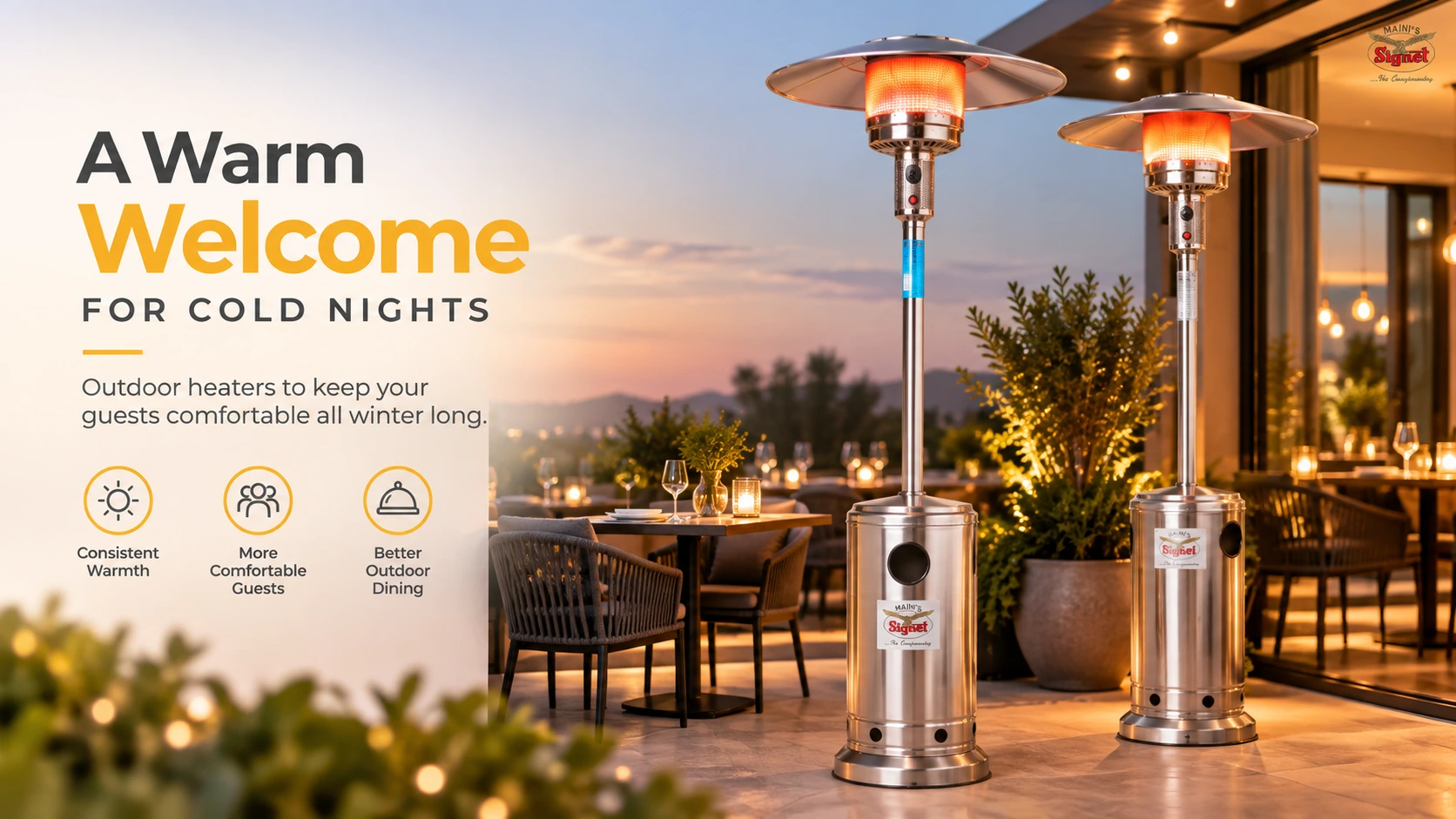
Signet’s LPG lineup covers a range of budgets and finishes. The Indian LPG Heater is the most affordable gas option, the Imported LPG Heater adds flame control with a safety shut-off, and the Signet Blaze LPG Heater brings a sleek black canopy for a more premium look.
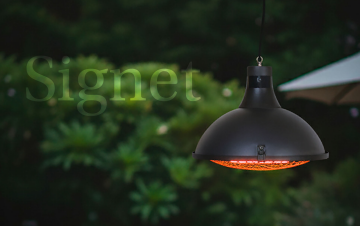
On the electric side, the Imported Electric Heater handles single-zone coverage for smaller patios, the Dual Head model delivers wider, more even heating for larger areas, and the Hanging Heater suits covered spaces where a ceiling mount frees up floor space.
Browse the full LPG and electric heater range to compare coverage area, mounting style, and output before winter sets in.
Frequently Asked Questions
How many outdoor heaters does a restaurant patio need?
Most patios need one heater for every 150 to 200 square feet of seating, spaced so coverage zones overlap slightly and no table sits in a cold gap between units.
Are LPG or electric heaters better for restaurants?
LPG heaters work well in fully open spaces and heat up faster, while electric heaters suit covered or partly enclosed patios where a power outlet is already available.
What temperature can outdoor dining still work in?
With heaters, wind protection, and the right layout, most guests stay comfortable down to around 40°F, and covered heated setups can extend that range even lower for shorter visits.
Is it safe to use an LPG heater under a covered patio?
Only if the space has enough open-air ventilation. Follow OSHA and NFPA clearance guidance, and never operate an LPG heater in a fully enclosed area without proper airflow.
How much clearance does an outdoor heater need from tables or decor?
Keep at least 3 feet of clearance between any heater and flammable material, including umbrellas, decorations, and seating fabric, following NFPA’s outdoor heater safety guidance.
Do LPG heaters work well in windy locations?
LPG heaters perform best with some wind protection in place, since strong gusts push heat away from tables. Pairing a heater with a windbreak panel or screen keeps output effective.
Get Your Patio Ready for Winter
The Indian LPG Heater is a solid starting point for restaurants testing out winter patio service on a budget, while the Signet Blaze LPG Heater adds a sleeker black finish for open-air seating.
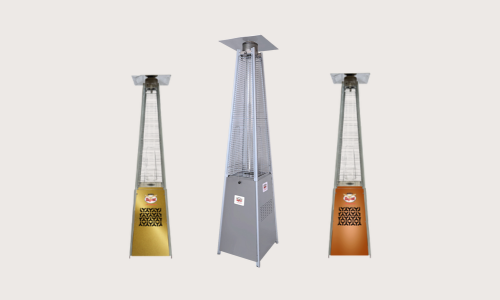
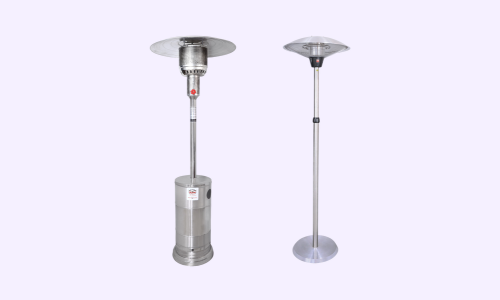
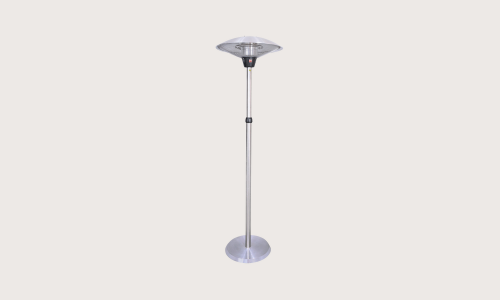
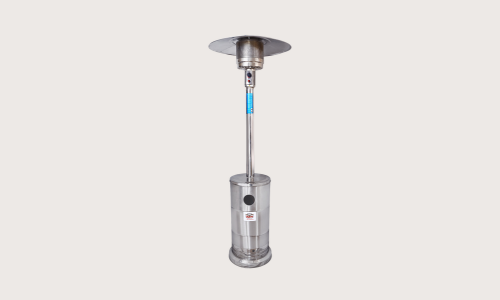
On the electric side, the Imported Electric Heater handles single-zone coverage, and the dual-head and hanging models suit larger or covered dining areas that already have power access. Browse the full LPG and electric heater range to match a model to your patio before the temperature drops further.