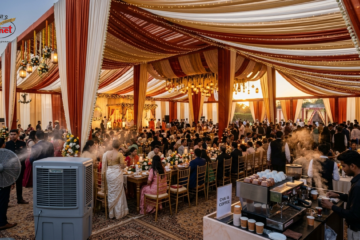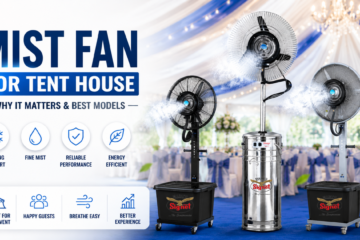


Starting a tent house business is one thing. Growing it into a reliable, high-revenue operation is a different challenge altogether.
If you have already completed the groundwork – registration, initial equipment, a few bookings – you are at the stage where the real decisions begin.
This guide covers the practical strategies that separate tent house businesses that plateau at a few lakhs per year from those that consistently scale.
If you are still in the setup phase, read our earlier guide on how to start a tent house business in 2026 before continuing here.
1. Expand Your Event Type Coverage
Most tent house businesses start by focusing on one type of event – usually weddings. That is a natural starting point, but it creates a dangerous dependency.
Wedding seasons in India are concentrated around specific months (October–February and May–June). That leaves large windows of low or no revenue.
The businesses that grow steadily are the ones that actively pitch to:
- Corporate events: Product launches, annual meetings, outdoor conferences
- Government and municipal functions: Republic Day events, sports days, community programmes.
- School and college functions: Annual days, fests, prize distribution ceremonies.
- Religious gatherings: Jagrans, bhog events, community pujas
- Local fairs and exhibitions: Melas, trade expos, farmer markets
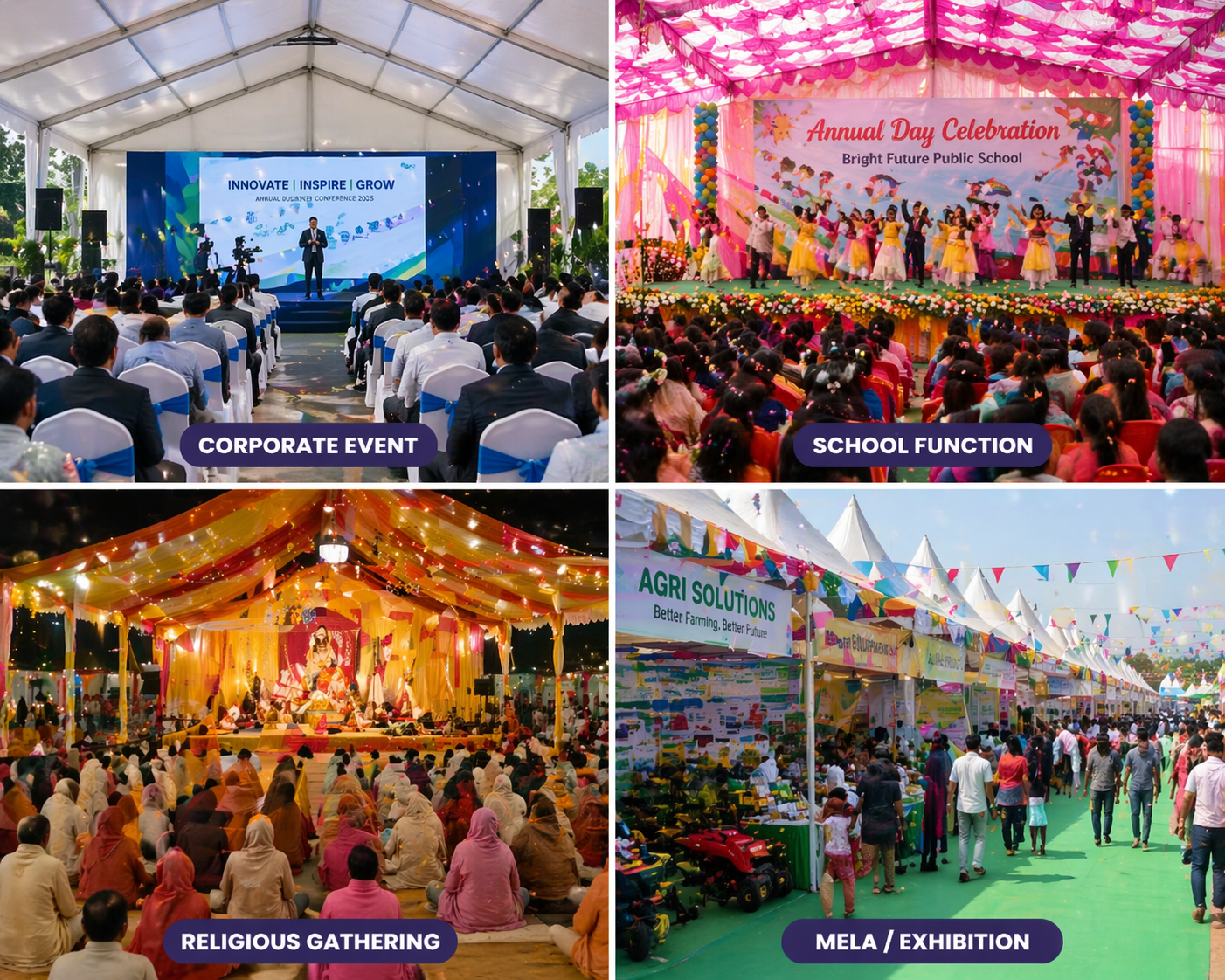
Each of these verticals has different peak seasons, which means when you serve all of them, your equipment stays deployed year-round.
If you are considering expanding into full-service event planning alongside your equipment rental, our guide on how to start an event management business in India covers how the two models complement each other.
2. Upgrade Your Equipment – Strategically
Worn-out or outdated equipment is one of the most common reasons tent house businesses lose repeat clients. Clients notice when chairs wobble, when fans are noisy, or when the coffee station looks like it has been through ten monsoons.
The rule is simple: upgrade the items guests interact with directly before upgrading backend infrastructure.
Cooling and ventilation is usually where the guest experience is most affected. An event that gets too hot loses everything.
Signet’s air coolers and mist fans are built for continuous commercial event use – far more reliable than domestic units running for 10–12 hours straight.
For open-ground events where raw airflow is needed across a large tent area, Farrata fans are the standard choice among professional operators.
For winter events, heating is just as important as cooling is in summer. A single Signet heater placed near the guest seating zone makes a visible difference in comfort and is something most competitors skip entirely.
Refreshment counters are a high-visibility upgrade that clients remember. Adding a proper espresso coffee machine to your setup – rather than just flasks – signals a premium level of service.
For events with children or a fun element, a sugar candy machine or a popcorn machine adds an attractive counter that guests photograph and remember.
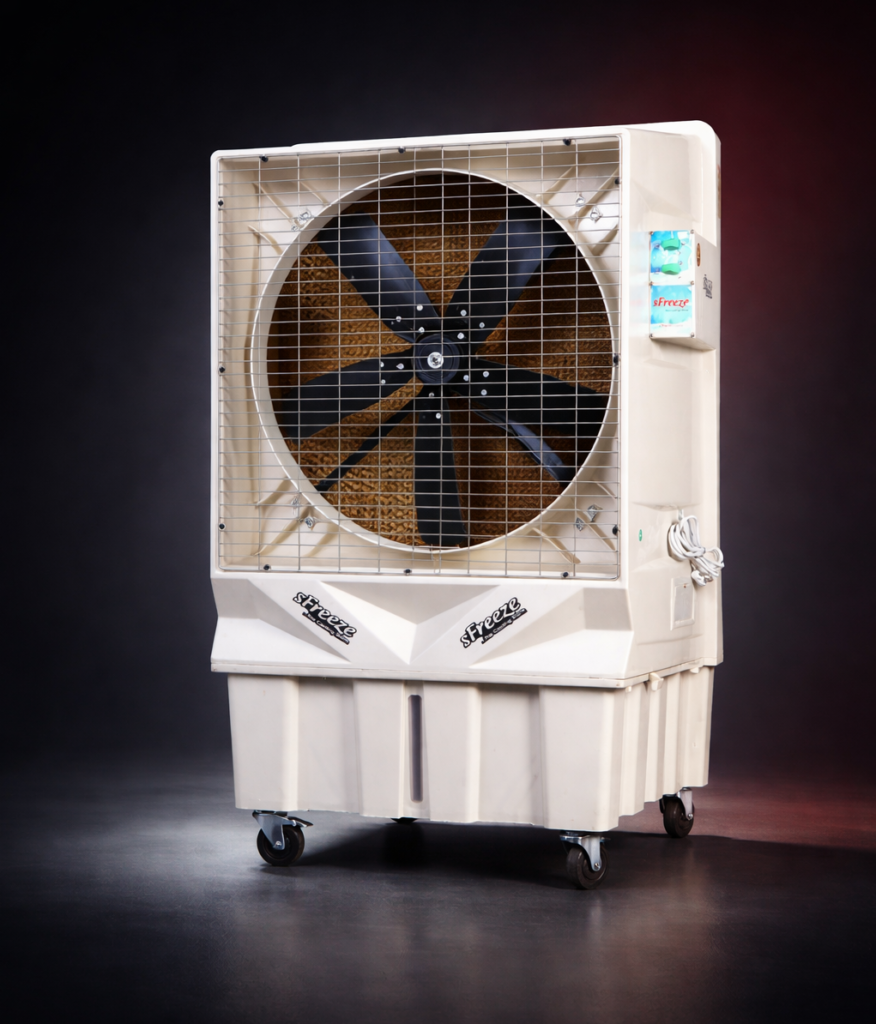
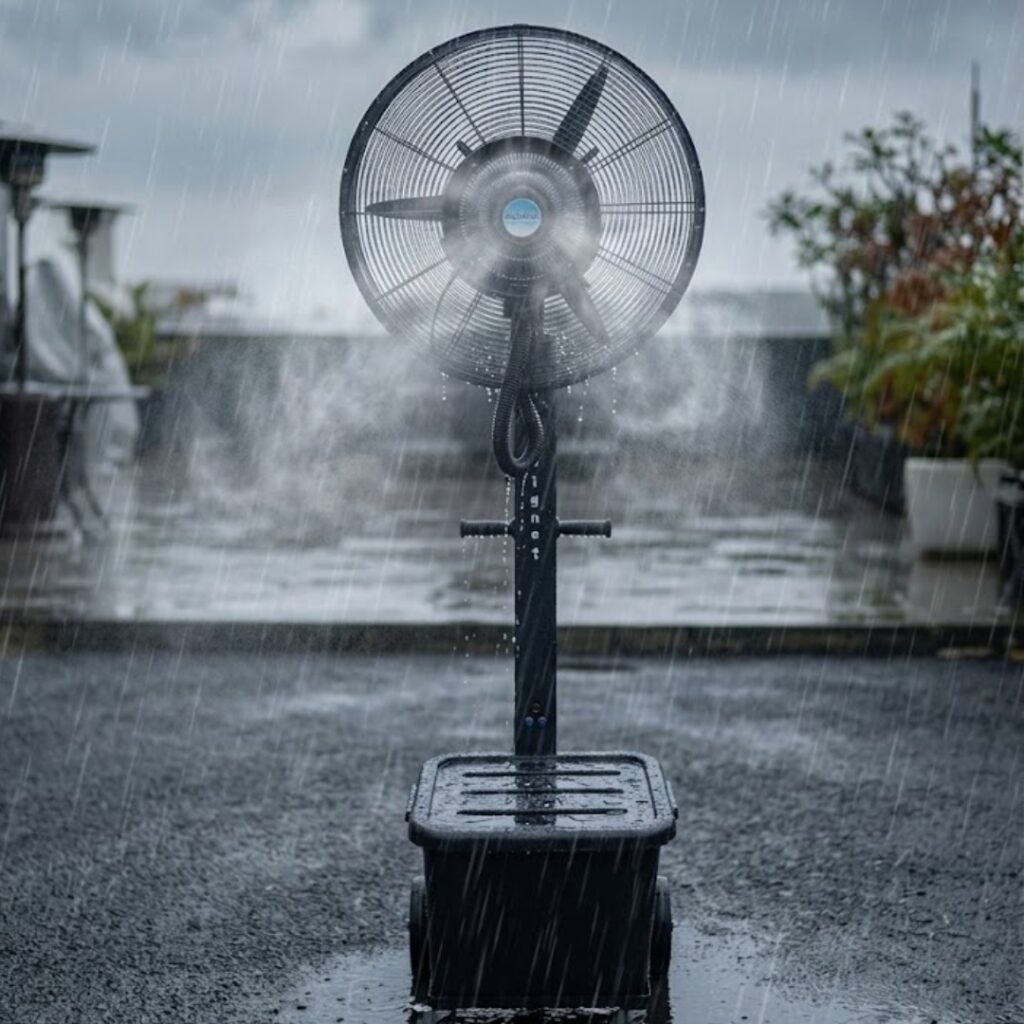
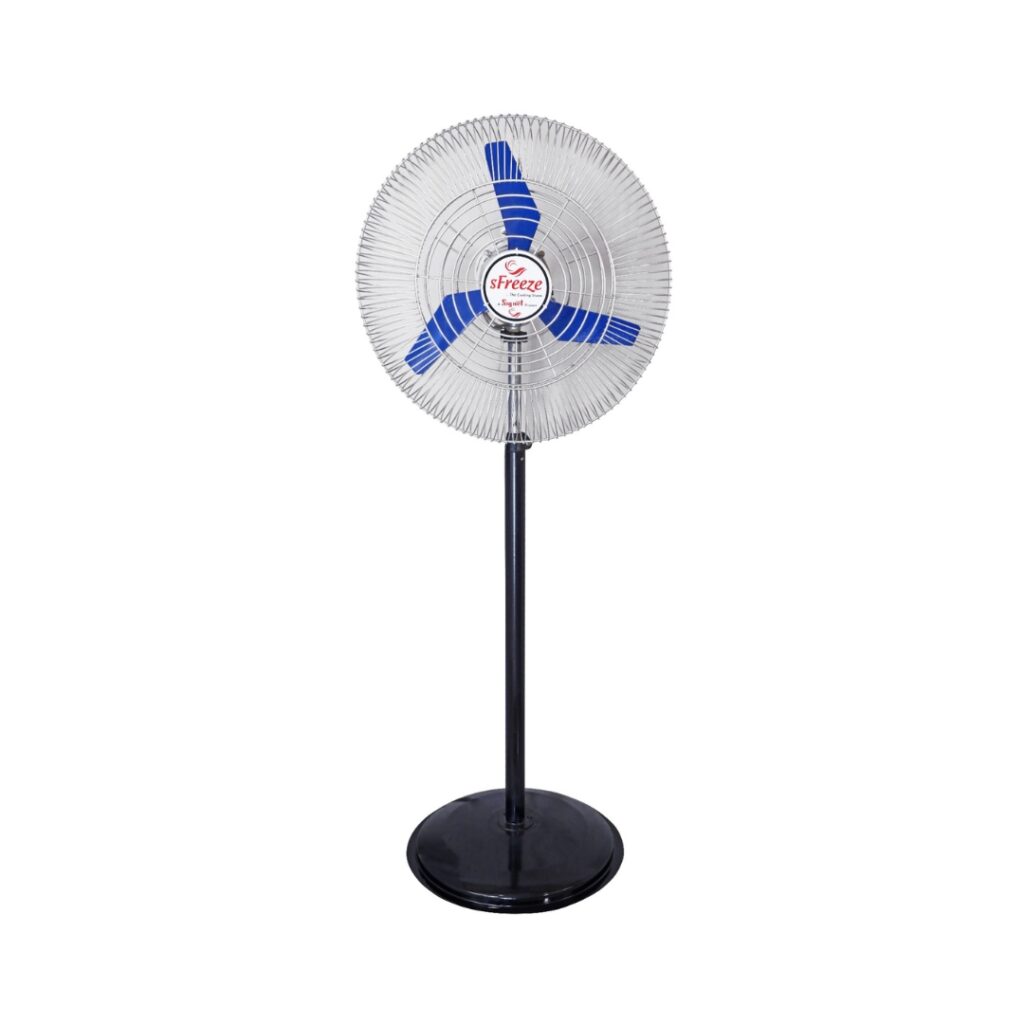
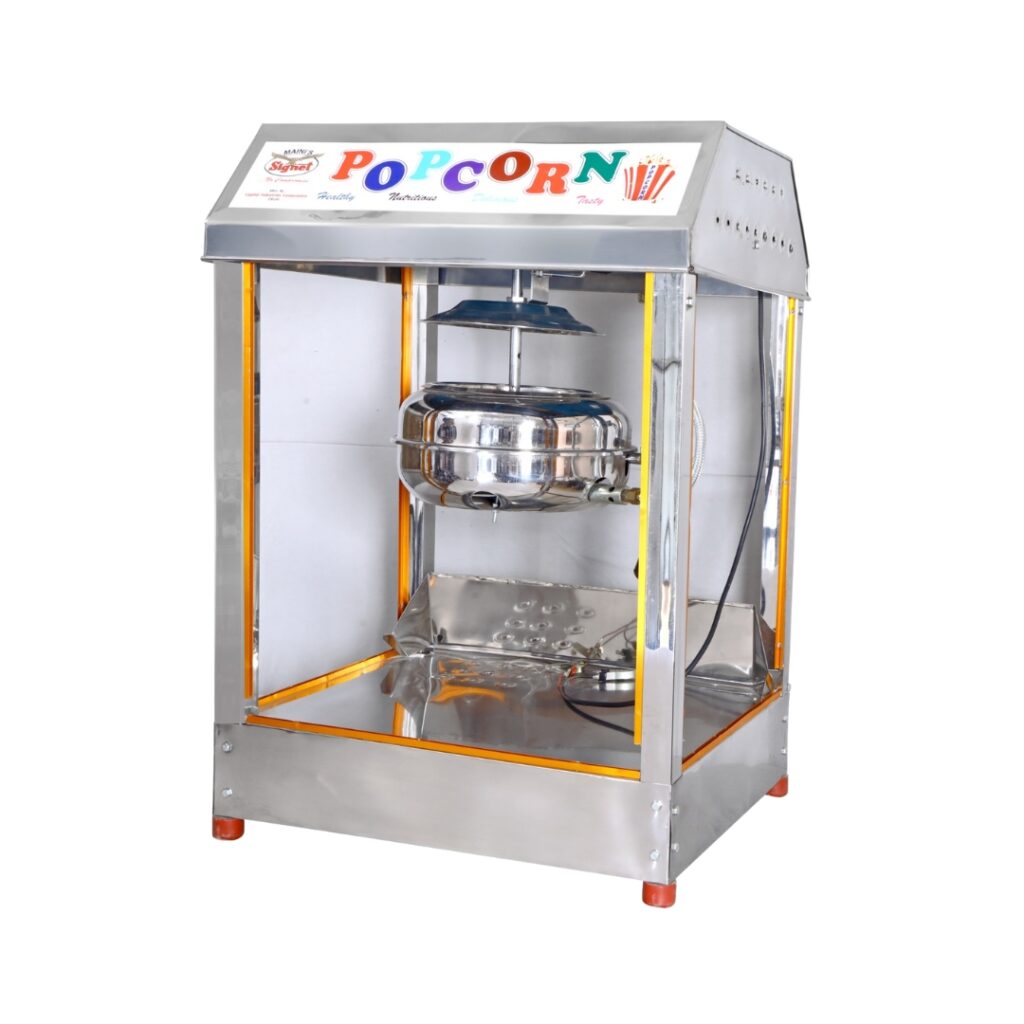
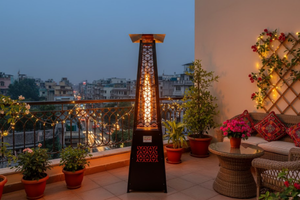
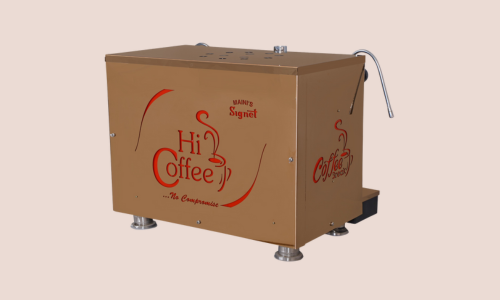
For a full breakdown of the equipment categories you need in your inventory, refer to our complete tent house items list.
3. Build a Referral System – Not Just Word of Mouth
Word of mouth works, but it is passive. A referral system is active.
The difference is simple: in a referral system, you give people a reason and a mechanism to refer you.

Practical approaches:
- Caterer and decorator partnerships: These are the two vendors most commonly booked alongside tent houses. Build a formal arrangement where you refer to each other. Even a simple verbal agreement with three or four reliable caterers in your area will generate consistent leads.
- Venue owners: Farm houses, banquet halls, and community centres that do not provide outdoor tenting often get requests for it. Position yourself as their preferred tent house partner.
- Client incentives: Offer a discount on the next booking for every confirmed referral a past client gives you. Keep it simple – no complicated points systems.
- Vendor listing on wedding platforms: WedMeGood, ShaadiSaga, and similar platforms allow tent house and event rental vendors to list their services. These generate inbound inquiries from clients who are actively comparing options.
If you serve weddings, having a dedicated page to share with planners helps — our mist fans for outdoor weddings page is a good example of the kind of niche content that builds trust with venue referral partners.
4. Price for Profitability, Not Just to Win the Booking
One of the most common mistakes in tent house businesses is consistently undercutting competitors to win bookings, then finding that margins are too thin to reinvest in equipment or staff.

A few practices that help:
Package your services. Instead of quoting individual items, create packages – Basic, Standard, and Premium – with clear inclusions. This shifts the conversation from price comparison to value comparison. A client asking “what do I get in the Premium package?” is a much better conversation than “can you match their quote?”
Charge separately for seasonal items. Air coolers, heaters, and mist fans should be line items, not absorbed into a base rate. Clients understand that running 20 coolers has a cost. When it is itemised, there is less resistance than when it is bundled invisibly and the total price seems high.
Build in a buffer for logistics. Installation time, transport, and labour are often underpriced. Track your actual time and fuel costs for three or four events, then reprice accordingly.
5. Establish an Online Presence That Generates Leads
In 2026, a tent house business with no online presence is invisible to a growing share of customers – particularly corporate clients and younger families who search before they call.
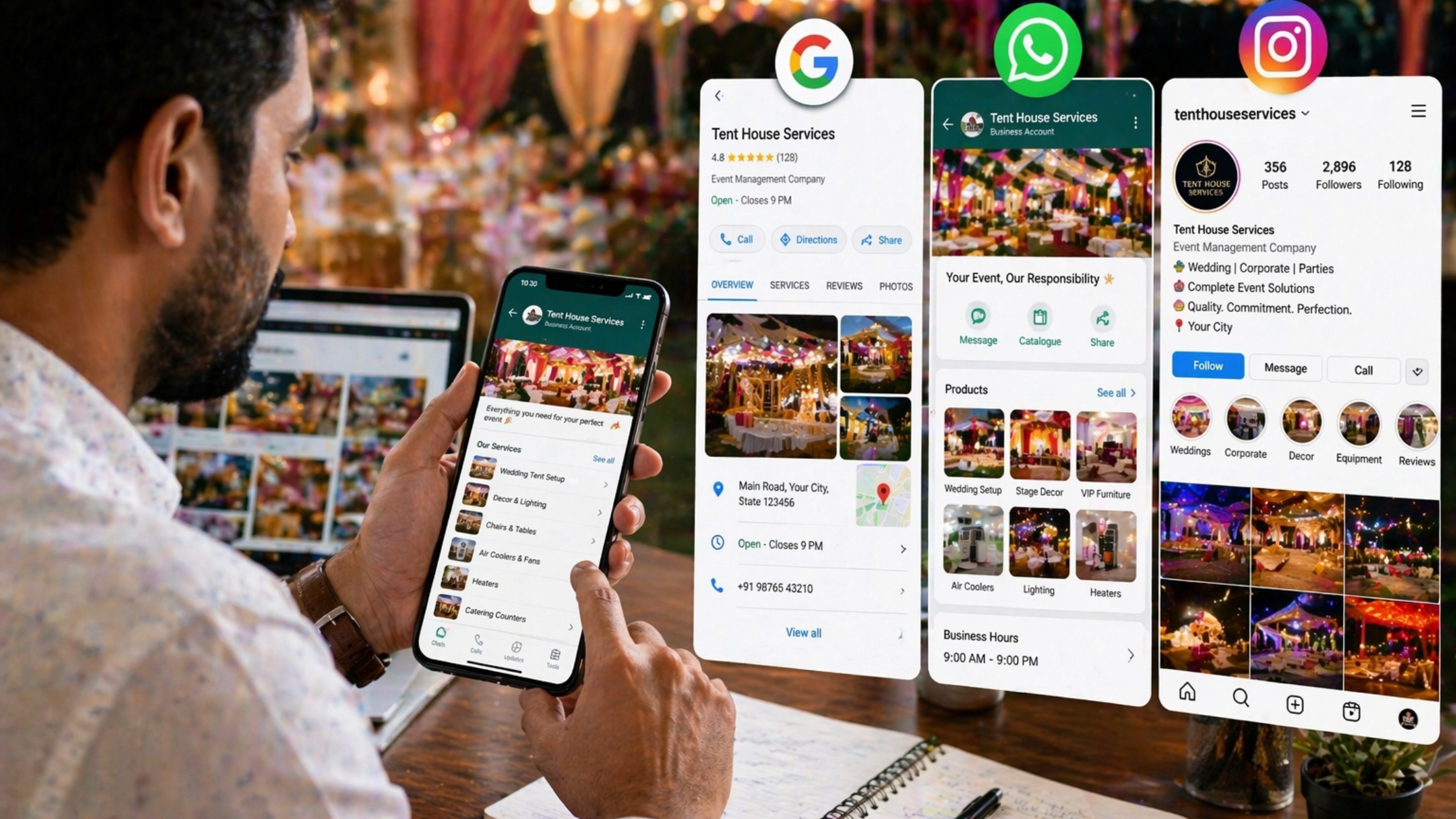
The minimum viable online presence for a tent house business:
Google Business Profile – Free, high-impact, and the first thing that appears when someone searches “tent house near me” or “shamiana for rent in [your city].” Keep photos updated. Add your services. Respond to reviews.
WhatsApp Business – Set up a catalogue with your packages, photos, and pricing. Use broadcast lists to send seasonal offers to past clients. Most tent house bookings in India still happen over WhatsApp – a Business account with a proper profile makes you look more established.
IndiaMart listing – Particularly relevant if you want to reach corporate and institutional buyers. Many organisations source event infrastructure through B2B platforms rather than personal referrals.
Instagram – One well-photographed event post per week is enough to build a portfolio that clients can browse before calling. Focus on real event photos, not stock imagery.
6. Train Your On-Ground Team
Equipment and bookings mean nothing if your setup team is slow, careless, or rude to clients on event day.
The single biggest driver of repeat business in tent house operations is how smoothly the setup and breakdown go. Clients remember if your team arrived late, if anything broke during installation, or if they were left waiting.
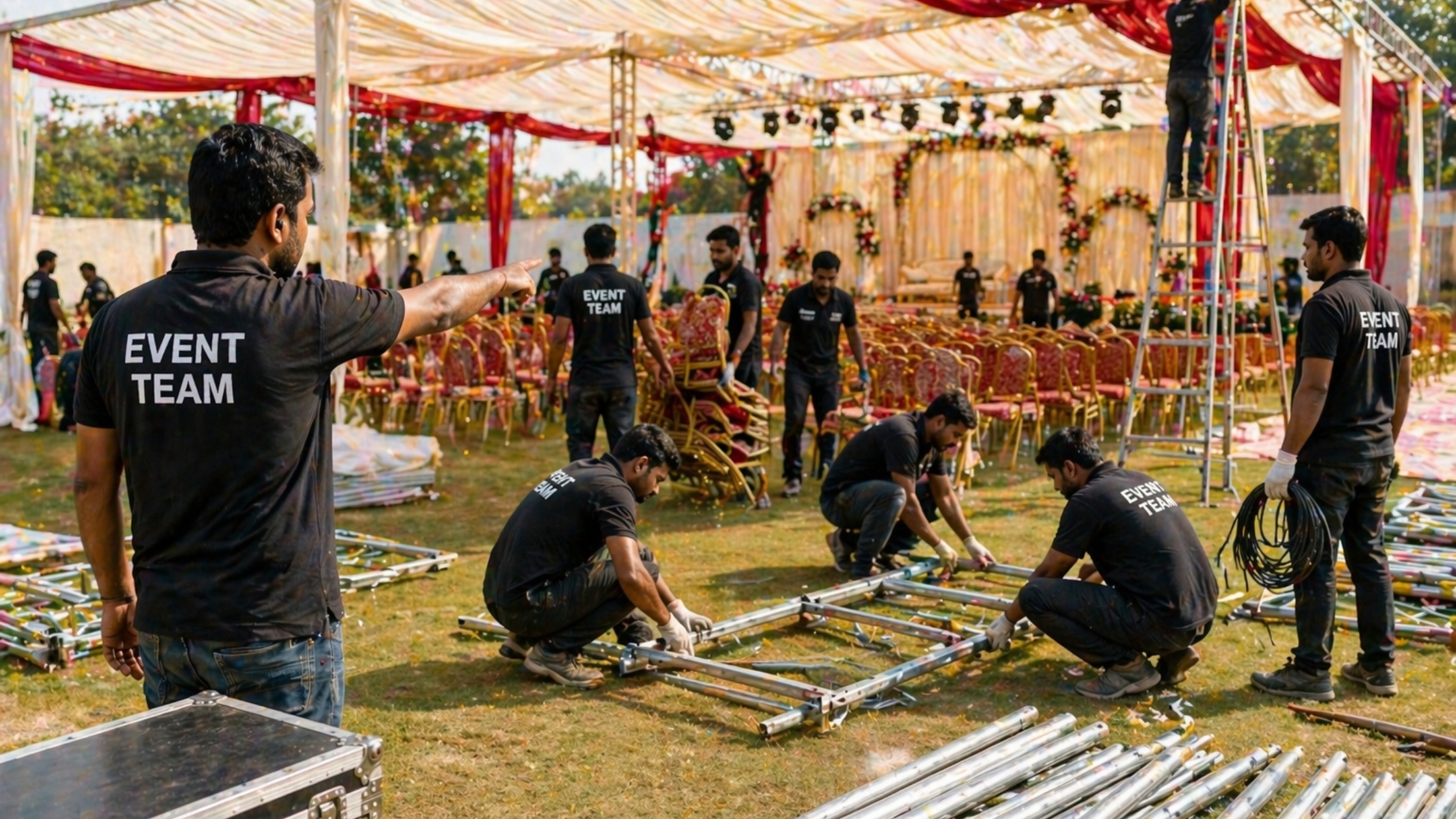
Minimum standards to establish:
- Arrival time at site: minimum 3 hours before the event starts
- A designated site supervisor for every booking above a certain size
- A checklist for installation that every team member follows (this also prevents missing items)
- A single point of contact number for the client on the day
These are not complicated systems. They just need to be formalised and followed consistently.
7. Track What Works – Then Do More of It
Most small tent house businesses run entirely on gut feel. That is fine in the early stage, but it limits growth.

At a basic level, track:
- Where each new inquiry came from (referral, Google, platform, cold call)
- Which event types are most profitable after accounting for equipment, labour, and transport
- Which months have peak and lean bookings
Even a simple spreadsheet updated after each booking will give you patterns within six months. You will quickly see which referral sources to double down on, which event types have the best margins, and which months need targeted marketing.
Growing Takes Intentional Decisions
A tent house business grows when you stop treating every booking as a one-off job and start building systems – for referrals, pricing, equipment quality, team performance, and client communication.
None of the strategies above require large capital investment. Most require consistent attention and small, deliberate decisions made over time.
The businesses in this industry that reach a stable, multi-lakh monthly revenue are not necessarily the ones with the most equipment.
They are the ones with the best reputation, the most reliable systems, and the clearest understanding of what their clients actually value.