

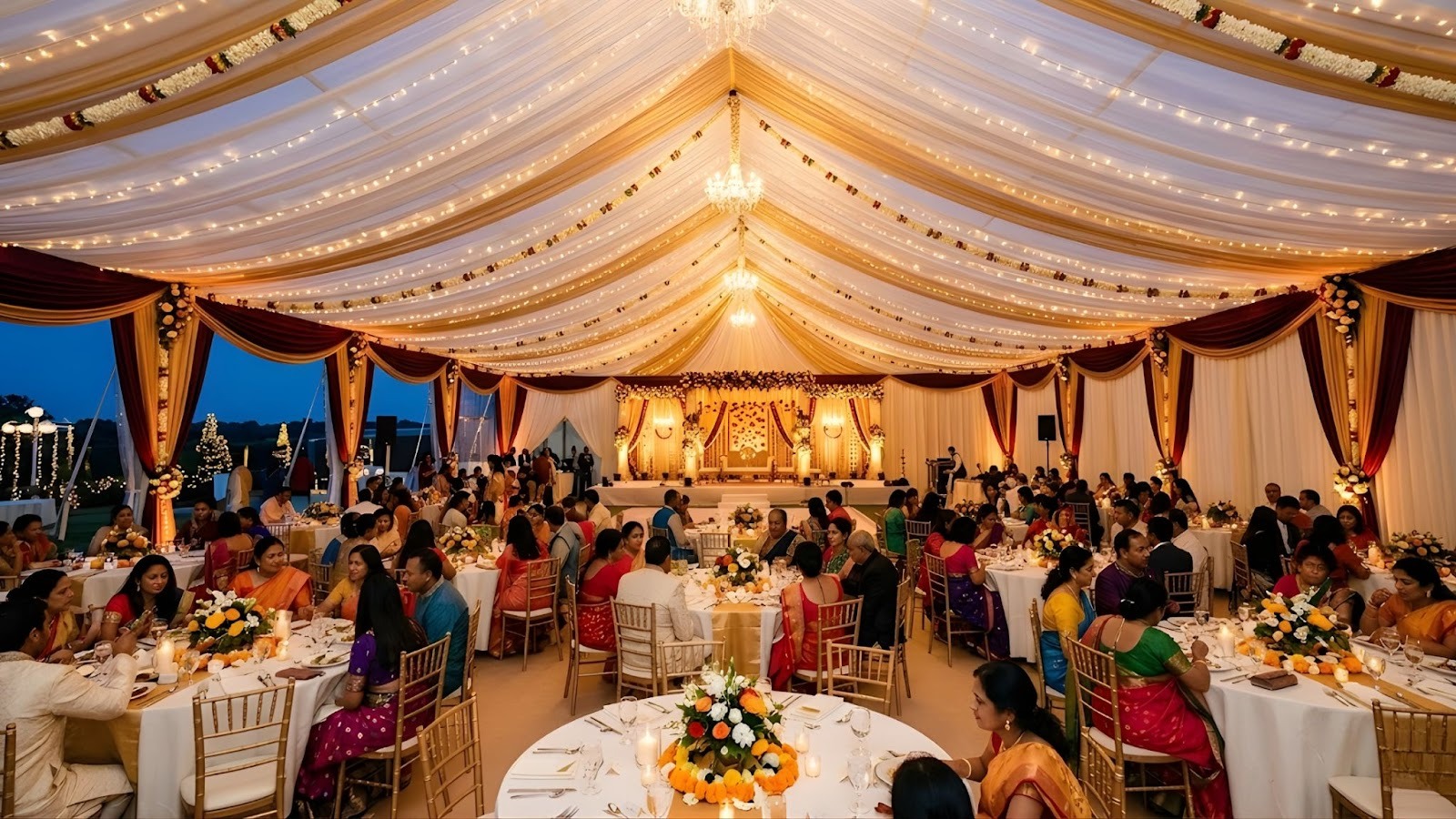
Is a Tent House Business Worth Starting in 2026?
Think about every wedding, birthday party, or corporate event you have attended. Someone had to arrange those tents, chairs, lights, and fans. That someone ran a tent house business.
And business is booming.
The global tent rental service market is expected to reach USD 1.73 billion in 2025 and grow to USD 3.29 billion by 2034, at a CAGR of 7.4%. (Source: Business Research Insights)
In India, the demand is even stronger. Millions of weddings happen every year. Add to that birthdays, anniversaries, religious events, and corporate gatherings. The need for tent services never really stops.
More than 60% of demand comes from weddings, corporate events, and festivals.
This guide will walk you through everything you need to start your own tent house business in 2026, from equipment and costs to licenses and profit potential.
What Is a Tent House Business?
A tent house business rents out event essentials to people hosting celebrations or gatherings.
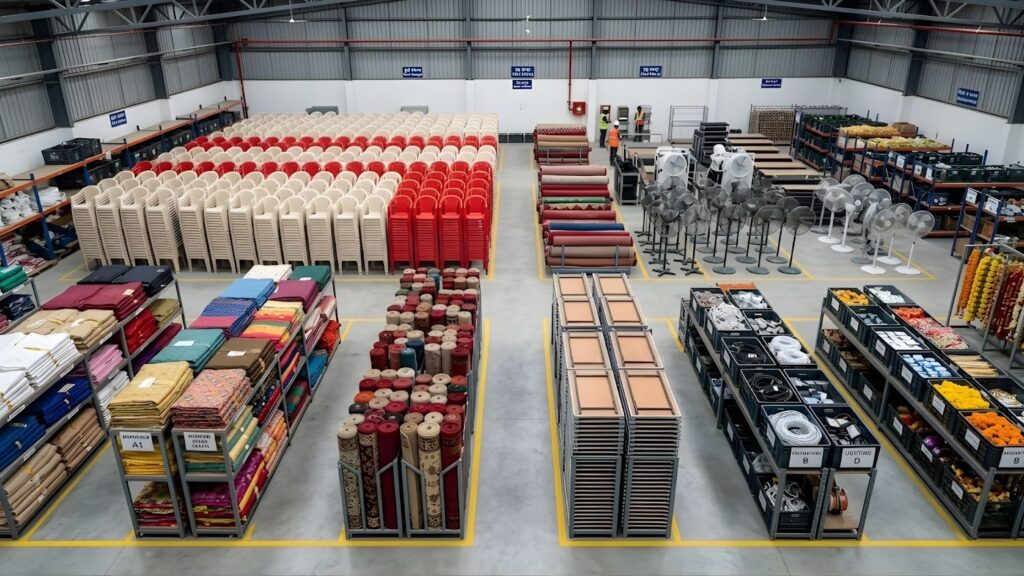
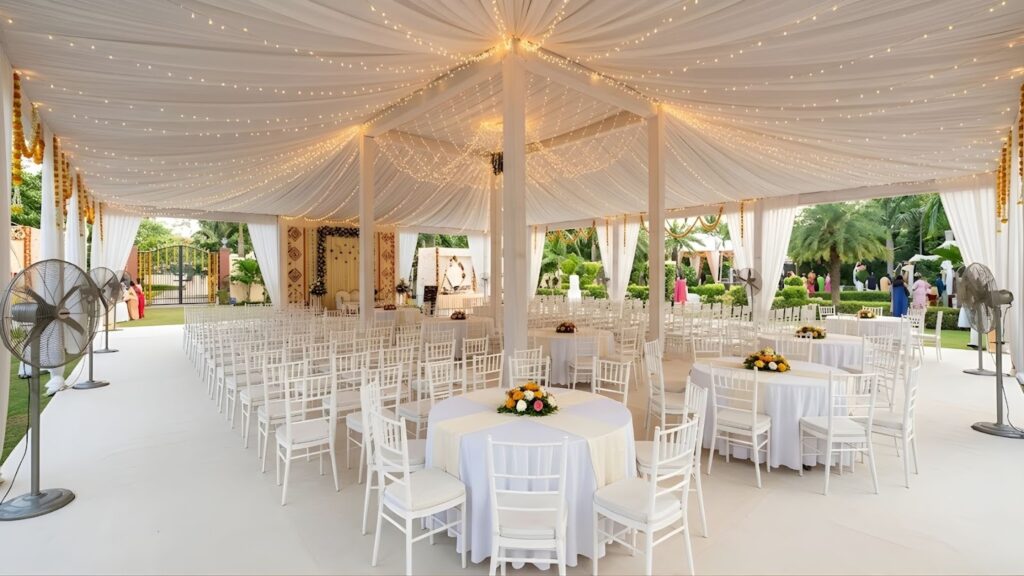
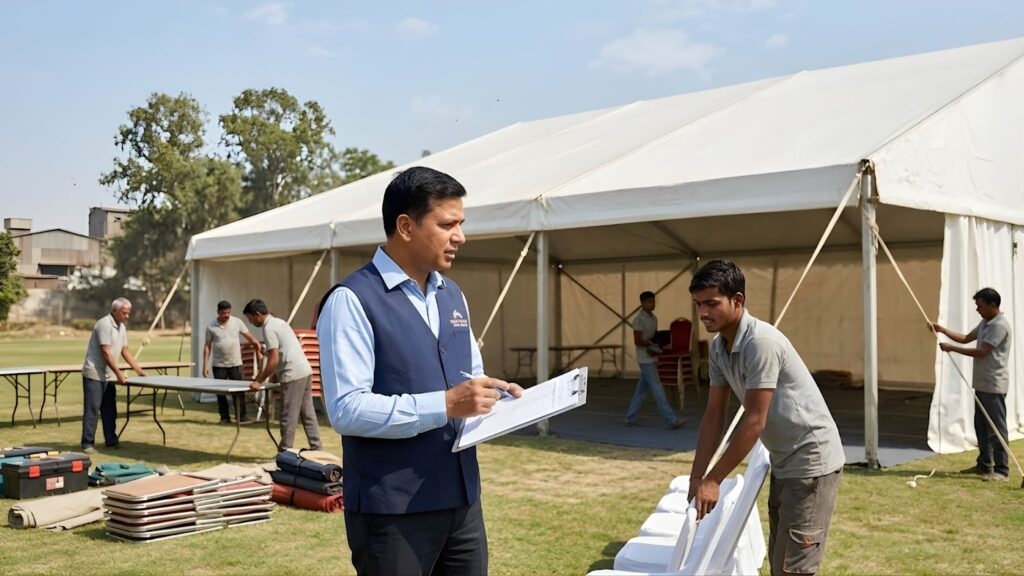
This includes tents (shamiana), chairs, tables, fans, lights, sound systems, utensils, carpets, decorations, and more. You set everything up, manage the event day, and pack it all back after.
You earn money by charging for each rental item plus labor and setup fees.
Why 2026 Is a Good Time to Start a Tent House Business?
The event industry in India is growing fast. People are spending more on celebrations, and demand for professional tent services is rising in smaller cities and towns, not just metros.
About 45% of high-end event planners now request luxury tents with customization, while 40% demand personalized lighting and decor solutions. (Source: Business Research Insights)
This means even small tent businesses can earn more by offering better quality setups.
Step 1: Understand the Business Model
There are two main ways to run a tent house business.
Rental Only: You rent out equipment. The client handles setup themselves. This requires less staff but lower earnings per booking.
Full Service: You supply AND set up everything. This earns more per booking and builds a better reputation. Most successful tent businesses follow this model.
You can start with rentals and move to full service as your inventory grows.
Step 2: Choose Your Target Market
Before buying equipment, decide who you want to serve.
Weddings are the biggest earners. One wedding booking can bring in Rs. 50,000 or more depending on guest count and location.
Birthday parties and anniversaries are smaller but happen more often. Great for filling your calendar between big events.
Corporate events and product launches are growing fast. Companies need clean, professional setups and are willing to pay premium rates.
Religious events and festivals like Navratri, Diwali Milan, and Jagrans provide steady seasonal income.
Starting with one or two segments keeps things manageable. As you grow, you can expand.
Step 3: Calculate Your Startup Investment
The cost to start depends on how big you want to go.
According to the Khadi and Village Industries Commission (KVIC), a tent house business can be launched with a minimum investment of Rs. 4 lakh. This covers approximately Rs. 1 lakh for a 500-square-foot storage shed and Rs. 3 lakh for equipment including shamiana, tables, chairs, fans, utensils, and bamboo poles. (Source: Zee News / KVIC)
For a mid-size setup serving larger weddings, plan for Rs. 10 to 15 lakh.
A premium setup with luxury decor, LED lighting, and imported tent fabric can go up to Rs. 50 to 60 lakh.
Here is a basic cost breakdown for a beginner setup:
| Item | Estimated Cost |
| Shamiana / Tents (3-4 sets) | Rs. 80,000 to 1,20,000 |
| Chairs (200-300 pieces) | Rs. 40,000 to 60,000 |
| Tables (30-50 pieces) | Rs. 25,000 to 40,000 |
| Fans (farrata/industrial) | Rs. 20,000 to 40,000 |
| Lighting equipment | Rs. 20,000 to 35,000 |
| Carpets and floor mats | Rs. 15,000 to 25,000 |
| Utensils and serving items | Rs. 20,000 to 30,000 |
| Storage space (rent) | Rs. 5,000 to 10,000/month |
| Total (approximate) | Rs. 2.5 to 4 lakh |
💡 Tip: Start lean. Buy what covers 2 to 3 events simultaneously. Rent extra items from other tent businesses when you get bigger bookings.
Step 4: Build Your Equipment List
A proper equipment list is the backbone of your tent house. Here is what you will need at minimum:
Shelter and Structure: Shamiana fabric, iron/bamboo poles, ropes and pegs, canopy covers, entrance arches.
Seating and Furniture: Plastic chairs, round tables, dining tables, VIP sofa sets, stage furniture.
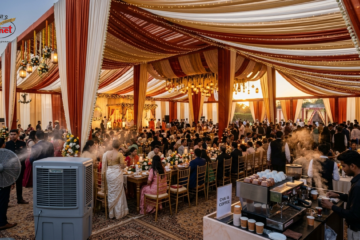
Cooling and Ventilation: Industrial fans (Farrata fans), air coolers for summer events, mist fans for outdoor setups in hot weather. Well-maintained fans are one of the most requested items for Indian outdoor events.
For high-quality Farrata fans and mist fans built for outdoor events, check out Signet’s range of industrial and mist fans designed for continuous commercial use.
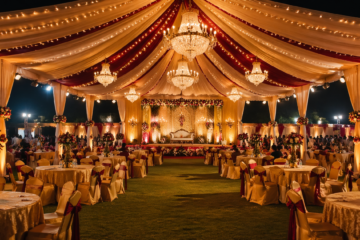
Lighting: LED string lights, spotlight fixtures, chandeliers, uplights, generator sets.
Catering Support: Utensils, serving trays, cooking vessels (optional), food warmers.
Decor: Curtains, backdrops, artificial flower arrangements, carpet runners, stage setups.
Sound System (optional): Speakers and amplifiers are a high-demand add-on for weddings and religious events.
To understand the full range of equipment involved, you can check this tent house items list.
Step 5: Get Your Licenses and Registrations
Running a tent house business legally protects you and builds client trust. Here is what you need:
Business Registration: Register as a sole proprietorship (simplest option) or an LLP/private limited company if you plan to scale. A simple Udyam registration works for small businesses.
GST Registration: Tent house services attract an 18% GST rate, applicable to all tent rentals, setups, and related equipment including tables, chairs, fans, and lights. (Source: Busy.in / CA Jagdish Prasad)
You must register for GST if your annual turnover crosses Rs. 20 lakh. Register at www.gst.gov.in.
Local Body License: Many municipal corporations require a trade license for event rental businesses. Check with your local panchayat or municipal office.
Event Permits: For each event, especially large outdoor ones, you may need temporary permission from local police or the municipal body. Your clients usually handle this, but knowing the process helps.
Insurance: A basic business insurance policy protects your equipment from theft or damage. This is not mandatory but highly recommended.
For a complete checklist of the paperwork involved, see our documents required to start an event management business — the registration steps apply equally to tent house businesses.”
Step 6: Set Your Pricing
Pricing depends on your city, the type of event, and the number of items rented.
Per-Item Pricing works well for small clients who need specific items. Example: Rs. 30 per chair, Rs. 100 per table per day.
Package Pricing works better for full events. A basic wedding package for 200 guests might be priced at Rs. 25,000 to 40,000 covering tent, chairs, tables, fans, and lights.
Tiered Packages give clients options. A basic, standard, and premium package with different decor levels lets you serve different budgets.
💡 Always charge a security deposit of 20 to 30% at the time of booking. This protects you against last-minute cancellations.
Step 7: Hire and Train Your Team
A tent house business is very labor-intensive during event days. You need a reliable crew.
Core Team (starting out):
- 1 supervisor or manager (can be you)
- 4 to 6 installation workers
- 1 driver for the transport vehicle
As you grow:
- A dedicated sales/booking person
- A decorator or decor specialist
- Cleaning and maintenance staff
Pay your workers fairly. A reputation for treating staff well leads to lower turnover and better work quality at events.
Step 8: Get Your First Bookings
The first few clients are always the hardest to get. Here is how to start:
Word of Mouth: Tell everyone you know. Family, friends, neighbors. Offer a discount for first-time clients in exchange for photos and a review.
WhatsApp and Social Media: Create a WhatsApp Business account. Post photos and videos of your setups on Instagram and Facebook. Reels of tent setup time-lapses or before-and-after decor get great reach.
Local Vendor Networks: Connect with wedding planners, caterers, photographers, and DJs. They get event inquiries every day and can refer to tent house services.
Google Business Profile: Set up a free Google Business listing with your location, services, photos, and phone number. This helps people find you when they search for a “tent house near me.”
Offline Marketing: Distribute flyers at wedding halls, catering companies, and event spaces. A small banner outside your storage yard also works well.
Step 9: Manage Your Operations Smoothly
Good operations separate a struggling tent house from a thriving one.
Keep an inventory record. Know exactly what you own, what is out on rent, and what is damaged. A simple spreadsheet works when you are starting.
Photograph every setup. Build a portfolio. This is your biggest marketing asset.
Maintain your equipment. Clean fabric after every event. Check fans, lights, and poles regularly. Clients notice the quality of your equipment.
Use contracts. A simple written agreement with each client listing items, quantity, dates, and payment terms protects everyone.
Collect payments smartly. Accept UPI, bank transfers, and cards. Digital payments create a paper trail and build trust.
How Much Can You Earn?
A medium-scale tent house with a good local reputation can earn Rs. 3 to 5 lakh per month during wedding season (October to February, and again April to June).
During wedding seasons, profit can go up to Rs. 5 lakh per season. And because this is largely a one-time investment that serves you for 5 to 10 years, the return on investment improves every year.
Off-season months can be filled with corporate events, birthday parties, and smaller bookings.
Tips to Grow Your Tent House Business
Add new services slowly. Start with basics, then add luxury decor, LED furniture, or theme setups as your income grows.
Specialize in one niche. Being known as “the best wedding tent house in [your city]” is more powerful than being average at everything.
Invest in better cooling. In Indian summers, good ventilation is what makes or breaks an outdoor event. Upgrading to quality mist fans and duct coolers makes your setups stand out and justifies higher pricing.
Add a coffee station. A coffee machine at a tent event is an easy add-on that clients love. Check out Signet’s commercial coffee machines that are built for event and hospitality use.
Get testimonials and reviews. After every successful event, ask for a Google review and a WhatsApp testimonial with a photo. This builds your credibility fast.
For a more detailed breakdown of each of these strategies, read our guide on how to grow your tent house business.
Common Mistakes to Avoid
Buying too much inventory too soon. Start with what you need for 2 to 3 events. Expand based on actual demand.
Underpricing to get clients. Low prices attract low-budget clients and drain your margins. Price based on value, not fear.
No written agreements. A verbal deal with a client can lead to disputes over payment or item damage. Always use a simple written contract.
Ignoring equipment maintenance. Dirty tents, broken chairs, or noisy fans ruin your reputation. Maintain your equipment after every event.
Not tracking income and expenses. Even a basic Excel sheet helps you understand your profits and plan better.
Is a Tent House Business Right for You?
This business works best if you are comfortable with physical work, outdoor environments, and managing a team. The money can be very good, especially during peak wedding seasons.
The entry cost is relatively low compared to most businesses. And once you build a good name in your area, repeat bookings and referrals keep coming without much extra marketing effort.
If you are looking for a business that rewards hard work, local relationships, and consistent service quality, a tent house business in 2026 is a strong choice.
Frequently Asked Questions
How much does it cost to start a tent house business in India?
You can start with Rs. 2.5 to 4 lakh for a basic setup. A mid-scale setup costs Rs. 10 to 15 lakh.
Do I need a license to run a tent house business?
Yes. You need a basic business registration and GST registration if your turnover exceeds Rs. 20 lakh. A local trade license may also be required.
What is the GST rate on tent house services?
Tent house services attract 18% GST in India.
How do I get my first clients?
Start with friends and family referrals. Set up a Google Business Profile. Network with wedding planners, caterers, and photographers in your area.
Can I run a tent house business part-time?
Yes, especially in the beginning. Many tent house owners start part-time while working another job, then shift to full-time once bookings are consistent.
What equipment is most important to buy first?
Tents (shamiana), chairs, tables, and fans are the core essentials. Everything else can be added gradually.
Disclaimer: Costs and regulations mentioned in this article are indicative and may vary by city and state. Please verify local licensing requirements with your municipal authority before starting your business.
Tant households